
Property Management for Beginners: A Smart, Stress-Free Playbook 🏠
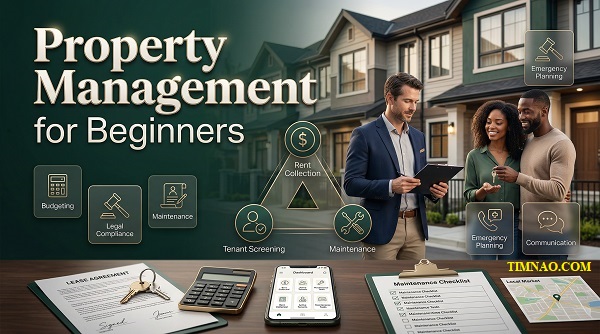
Property management for beginners can feel overwhelming at first, especially when rent, tenants, maintenance, and legal basics all seem to come at once. This guide breaks everything down in a simple, practical way so you can understand what matters first and start with more confidence. Before we get into the details, here’s what you’ll learn.
If property management for beginners sounds like “collect rent and call a plumber when something breaks,” you are only seeing the surface.
In real life, property management is the system that keeps a rental property occupied, compliant, maintained, and financially healthy. It sits between the owner’s goals and the tenant’s daily experience. When it is done well, the property runs more smoothly, vacancies stay shorter, and problems get handled before they grow teeth.
This guide is for beginners who want to understand how property management actually works before they buy a rental, self-manage a first unit, or hire help. By the end, you will have a clear mental model, a practical workflow, and a realistic plan you can start using this week.
Why good property management changes the entire investment
A lot of beginners spend most of their energy on the purchase.
They compare prices, neighborhoods, loan options, and expected returns. That part matters, of course. But once the deal closes, the investment stops being a spreadsheet and starts becoming a real operating business.
That is where property management changes everything.
A good property can still perform badly
A rental can look great on paper and still disappoint in real life.
Why? Because the numbers you calculate before buying only tell part of the story. The rest depends on what happens after a tenant moves in. If rent collection is loose, maintenance is reactive, communication is poor, and records are messy, even a promising property can underperform.
This is why beginners often feel surprised.
They think they bought a property. In reality, they also took on a system that needs to be run well.
Property management affects income, costs, and stress at the same time
Good management does three things at once:
- It protects income by reducing vacancy, late payments, and tenant turnover.
- It controls costs by catching small issues before they become large repairs.
- It lowers stress by creating routines instead of daily chaos.
That is why experienced investors do not treat management as a side task.
They treat it as the operating engine of the investment.
If the engine is weak, the whole investment feels harder than it should. If the engine is strong, even an average property can become much more stable and easier to hold long term.
The real return is not just rent minus expenses
Beginners often define success too narrowly.
They look only at monthly cash flow. But the real return of a rental is influenced by much more than that:
- How long the property stays occupied
- How well tenants treat the unit
- How quickly issues are resolved
- How often you face disputes
- How well the property holds its condition over time
For example, two landlords may own similar units in the same area. One has long-term tenants, predictable maintenance, clean records, and low drama. The other deals with late rent, frequent complaints, rushed repairs, and constant turnover.
On paper, they own similar assets.
In practice, they are running two completely different businesses.
Good management gives you options later
This is one of the most overlooked benefits.
When your systems are strong, you can scale more easily. You can also hand off management more cleanly, because the property already has structure. Vendors are organized. Lease documents are easy to find. Maintenance history is documented. Expectations are clear.
Without that structure, every new property adds confusion.
With it, each property becomes easier to manage than the last.
A simple beginner mindset shift
If you only remember one idea from this section, let it be this:
Buying the property gets you into the game. Managing it well is what makes the game worth playing.
That is the real shift beginners need to make early.
You are not only buying a rental. You are taking responsibility for a living system made up of people, payments, repairs, rules, and decisions.
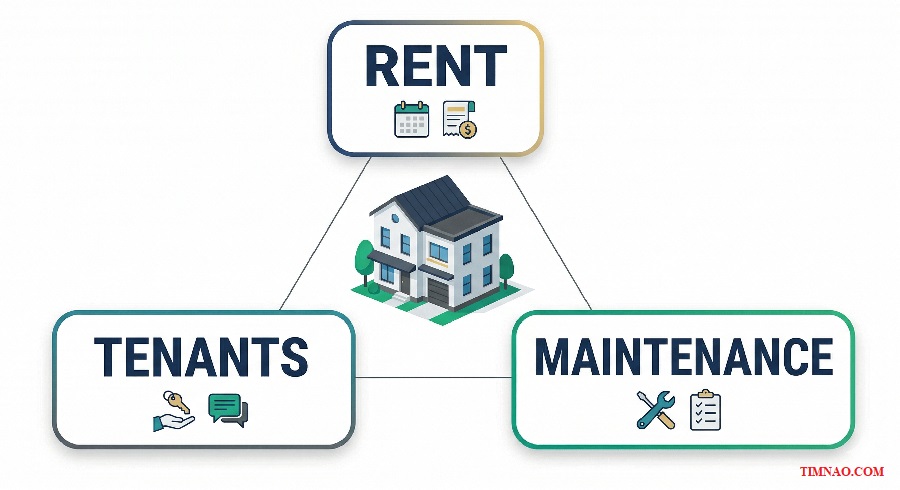
The rent, tenant, and maintenance triangle
If property management feels overwhelming at first, use this simple model: think of it as a triangle with three connected sides.
Those three sides are:
- Rent
- Tenants
- Maintenance
When one side weakens, the other two start feeling the pressure.
Rent is not just income, it is timing
Most beginners think rent means “money coming in.”
That is true, but it is incomplete.
Rent is also about timing, consistency, and predictability. A rental business does not just need income. It needs reliable income that arrives on schedule and can support the property’s actual costs.
That includes mortgage payments, insurance, taxes, repairs, reserves, and vendor bills.
Late rent creates more than an accounting issue. It can trigger cash flow stress, delayed repairs, and poor decisions. If the owner starts scrambling every month, the whole property begins to feel unstable.
This is why rent systems matter early.
A clear due date, a clear late policy, and a consistent collection process create more stability than beginners expect.
Tenants are not a detail, they shape the whole experience
A rental does not perform in a vacuum.
Tenants affect how often repairs come up, how long the unit stays occupied, how much damage occurs, how much communication is needed, and how predictable the property feels month to month.
A good tenant does not mean a perfect tenant. It means a tenant who is reasonably reliable, communicative, respectful of the property, and able to meet the lease terms.
That kind of tenant makes management easier.
A poor tenant fit can do the opposite. Late payments, repeated complaints, ignored lease terms, or careless damage can quickly erase the “good deal” feeling a beginner had when buying the property.
This is why tenant quality is not a bonus. It is one of the core drivers of investment performance.
Maintenance protects both value and tenant trust
Maintenance is where many beginners become too reactive.
They wait until something feels urgent. Then they rush to solve it. The problem is that delayed maintenance usually costs more, damages the tenant experience, and creates avoidable stress.
Preventive maintenance works differently.
Instead of asking, “What broke?” it asks, “What needs attention before it breaks?”
That includes things like:
- Checking for leaks
- Testing smoke and carbon monoxide detectors
- Watching for caulking, grout, and water damage issues
- Keeping outdoor areas safe and clean
- Handling seasonal wear before it becomes a repair emergency
Maintenance is not only about protecting the building. It is also about protecting the tenant relationship.
When tenants see that problems are handled seriously and promptly, trust increases. And when trust increases, renewals usually become easier.
The triangle only works when it stays balanced
Here is where beginners often go wrong: they try to optimize one side while ignoring the others.
A few common examples:
- Raising rent too aggressively while neglecting maintenance
- Filling vacancies fast without proper tenant screening
- Delaying repairs to save money, then paying much more later
- Focusing only on tenant happiness while failing to enforce payment rules
Each of these creates imbalance.
A healthier goal is balance, not perfection.
You want rent that matches the market, tenants who are a strong fit, and maintenance that stays ahead of problems. When those three work together, the property becomes more predictable and more resilient.
A quick real-world example
Imagine a small two-bedroom rental.
If the rent is priced fairly, the unit attracts qualified applicants faster. If the tenant is screened carefully, the chance of payment issues and conflict goes down. If maintenance is handled early, the tenant is more likely to stay, and the property stays in better shape.
Now compare that to the opposite setup.
The rent is overpriced, so the property sits longer. The owner gets impatient and approves a weak applicant. Small repair issues are ignored to “save money.” Within months, late rent, complaints, and damage begin stacking up.
Same unit. Very different outcome.
That is the triangle in action.
What a property manager is actually responsible for
Many beginners imagine a property manager as someone who mainly collects rent and calls repair people.
That is only a small part of the job.
A good property manager is responsible for the day-to-day operation of the rental, but also for the structure around it. They help turn a property from a loose set of tasks into a working system.
They help set the property up to perform well
A property manager’s work often starts before a tenant even signs a lease.
This can include:
- Reviewing the local rental market
- Setting or advising on the rent level
- Preparing the unit for showings
- Marketing the vacancy
- Responding to inquiries
- Showing the property
- Screening applicants
This part matters because the quality of the setup affects everything that comes after.
If the property is priced badly, marketed weakly, or filled too quickly with the wrong tenant, the manager ends up solving preventable problems later.
They manage the tenant relationship from start to finish
This is one of the biggest parts of the role.
A property manager may handle:
- Lease explanation and signing
- Move-in coordination
- Security deposit handling
- Rent collection
- Complaint response
- Maintenance requests
- Lease enforcement
- Move-out inspections
- Deposit deductions where appropriate
- Turnover prep for the next tenant
Notice how much of this is communication, not just operations.
That is important.
A property manager is often the first point of contact when something goes wrong. That means the role requires patience, clarity, professionalism, and consistency, not just technical know-how.
They protect the property physically
The property manager is also responsible for the condition of the asset.
That includes routine care, urgent repairs, contractor coordination, and follow-up. In many cases, they are the person making sure the property stays safe, habitable, and functional.
This may involve:
- Scheduling regular maintenance
- Handling emergency repairs
- Inspecting units and common areas
- Coordinating plumbers, electricians, cleaners, landscapers, and other vendors
- Checking that repairs are completed properly and on time
In plain terms, they are helping stop small issues from turning into expensive ones.
They keep the owner organized
This part is not glamorous, but it is one of the most valuable.
A strong property manager keeps records that help the owner understand what is happening and make better decisions. That can include:
- Rent collection records
- Expense tracking
- Inspection logs
- Signed leases
- Repair invoices
- Complaint history
- Insurance-related records
- Budget updates and reports
For a beginner, this is a huge deal.
Without records, every issue becomes harder to untangle. With records, decisions become clearer, handoffs become easier, and disputes become less messy.
They need more than “real estate knowledge”
Beginners often assume the role is mostly about knowing property.
It is broader than that.
A capable property manager needs a mix of skills:
Technical skills
They need enough operational knowledge to understand repairs, property standards, budgeting, lease basics, and how the building functions day to day.
Human skills
They need to communicate well, stay calm under pressure, manage conflict, and work with tenants, owners, vendors, and sometimes staff.
Decision-making skills
They need to make reasonable calls when conditions change quickly, especially during emergencies, vacancies, or tenant issues.
This is why the role is more multidimensional than many beginners expect. It combines operations, customer service, coordination, judgment, and follow-through.
They are the owner’s eyes and ears
This is probably the simplest way to explain the role.
A property manager notices what the owner cannot always see in real time:
- Which tenants are a good long-term fit
- Which repairs keep recurring
- Whether the current rent still fits the market
- Whether vendors are doing solid work
- Whether a small issue is turning into a bigger one
In that sense, a property manager is not just “help.”
They are the person translating daily property reality into decisions.
What beginners should take from this
Even if you plan to self-manage, you still need to understand the full role.
Why? Because self-managing does not remove the responsibilities. It simply means you are the one performing them.
And if you plan to hire a manager later, understanding the job helps you ask better questions, set better expectations, and judge performance more clearly.
A useful beginner question is not:
“Do I need a property manager?”
A better question is:
“Do I understand everything this role includes, whether I do it myself or pay someone else to do it well?”
That question leads to better decisions.
As the guide moves forward, the next piece becomes even more practical: once you understand the role and the system, you need to see how local market conditions shape nearly every management decision you make.
How the Local Market Shapes Property Management for Beginners
Many beginners assume a good rental strategy should work anywhere.
It does not.
Real estate is local by nature. A rent level that feels reasonable in one neighborhood can be completely unrealistic a few miles away. A unit that rents quickly near a hospital may sit empty near a college if the layout, lease length, or price do not match local demand.
That is why market awareness is not something you do once before buying. It should guide your decisions all year.
The market affects more than just rent
Beginners often think the local market only matters when setting price.
In reality, it shapes almost everything:
- How quickly your unit can lease
- What type of tenant is most likely to apply
- Which features people care about most
- How much vacancy risk you should expect
- Whether upgrades will actually pay off
- How aggressively you can raise rent at renewal
For example, if your area has a lot of new apartment supply, tenants may compare your property against newer buildings with better amenities. In that case, pricing too high just because your mortgage is expensive will not help.
The market does not care what you need the rent to be. It responds to what competing options look like.
Look at demand through a renter’s eyes
A useful beginner habit is to stop thinking like an owner for a moment.
Think like a renter with choices.
Ask:
- Why would someone choose this unit over the others nearby?
- What makes this property easier to live in?
- What kind of renter is this location naturally attracting?
- What are renters in this area most sensitive to: price, parking, schools, commute, pets, safety, or convenience?
That shift matters because local demand is rarely random. It usually follows a pattern.
A one-bedroom unit near a downtown transit line may attract young professionals who value convenience more than square footage. A three-bedroom home near good schools may attract families who care more about storage, yard space, and lease stability. A furnished unit in a business district may appeal to short-term professionals who want simplicity and speed.
When you understand the likely renter, your pricing, marketing, and lease decisions become much sharper.
What to watch in your local market
You do not need a giant research report. You just need to pay attention to the signals that actually affect your property.
Start with these:
Comparable rental listings
Look at similar units currently advertised in your area. Focus on location, size, condition, parking, pet policy, utilities, furnishings, and lease term.
Do not compare your property to the nicest listing you can find. Compare it to the listings a real tenant would consider instead of yours.
Days on market
If good units are leasing in a few days, demand is probably healthy. If similar units sit for weeks, your pricing and expectations should be more cautious.
Local job and population trends
When an area is adding employers, infrastructure, or new residents, rental demand often strengthens. When employers are downsizing, or residents are leaving, vacancy pressure can rise.
Neighborhood-level changes
A new grocery store, public transit improvement, school reputation shift, or safety issue can affect leasing more than broad national headlines.
Seasonality
Some markets have strong leasing seasons. College towns, family-oriented suburbs, and vacation areas often move in predictable cycles. Timing matters more than beginners expect.
How market knowledge changes real decisions
Here is where this becomes practical.
If the market is competitive and renters have many options, you may need to:
- Price more carefully
- Improve listing photos
- Respond faster to inquiries
- Make the unit move-in ready before showing
- Offer cleaner lease terms or easier online payments
If demand is stronger than supply, you may have more room to:
- Screen more carefully
- Stay firm on standards
- Test slightly stronger pricing
- Push for longer lease stability
This does not mean chasing every market mood swing.
It means letting the market shape your tactics instead of forcing your assumptions onto it.
A simple local market check you can do monthly
To stay grounded, review these once a month:
- 5 to 10 comparable listings
- Average asking rent for similar units
- Vacancy signs in your immediate area
- Any major employer, school, or infrastructure changes
- Whether your current property still matches local demand
This takes less time than most beginners think, and it keeps you from making slow, expensive mistakes based on outdated assumptions.
A simple property management workflow for your first unit
When beginners feel overwhelmed, it is usually because everything feels like one giant pile of responsibility.
A workflow fixes that.
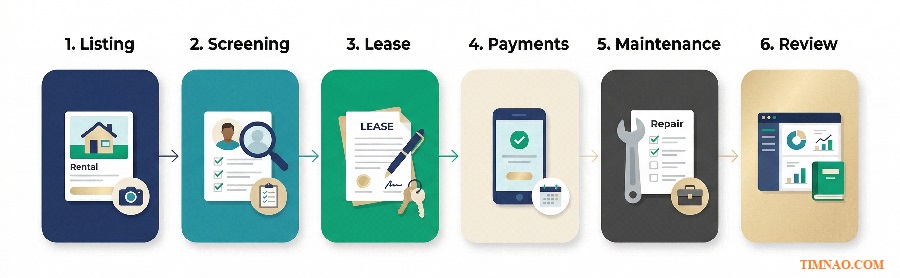
Instead of asking, “How do I manage a property?” ask, “What happens first, what happens next, and what needs a repeatable system?”
That turns property management into something much more manageable.
Stage 1: Prepare the unit before you market it
Do not rush this part.
A unit that is clean, bright, repaired, and properly photographed is easier to lease and usually attracts better applicants. It also reduces the risk of starting the tenancy with frustration.
Before listing, make sure you have handled the basics:
- Deep cleaning
- Paint touch-ups if needed
- Light fixture and smoke detector checks
- Appliance testing
- Leak checks under sinks and around bathrooms
- Lock, window, and blind checks
- Exterior clean-up if the property has outdoor space
This step sounds simple, but it directly affects your marketing, showing experience, and first impression.
Stage 2: Set rent from evidence, not emotion
This is where many beginners lose time.
They either overprice because they want a certain number, or underprice because they are afraid of vacancy.
A better approach is to use comparable units and then ask one simple question: where does this property honestly fit?
If your unit is cleaner, better located, or more functional than nearby options, you may deserve a stronger rent. If it is older, less updated, or lacks features people want, the market will likely punish wishful pricing.
A slightly lower rent that fills with a stronger tenant can outperform a higher rent that creates delay and pressure.
Stage 3: Market the property clearly
A good listing should make life easy for the right renter.
That means clear photos, a clean description, transparent basics, and a fast response system.
Your listing should answer the questions real renters care about first:
- How much is the rent?
- What is included?
- How big is the space?
- Is parking available?
- Are pets allowed?
- When is it available?
- What is the lease term?
- What makes this location practical?
This is also where simple tools help. For a first unit, you can organize leads in a spreadsheet and communication in email. As you grow, tools like Buildium, AppFolio, or DoorLoop can help centralize applications, messages, and showings.
Stage 4: Screen before you get emotionally attached to an applicant
A common beginner mistake is confusing a friendly applicant with a qualified one.
Your workflow should protect you from that.
Use the same screening steps for every applicant. That keeps decisions cleaner and helps reduce legal risk.
A practical screening sequence looks like this:
- Pre-qualify with a few basic questions
- Verify income and employment
- Review credit and payment history
- Check landlord references
- Review any local-law limits on background screening
- Approve or decline using the same standards for everyone
The goal is not perfection. It is consistency.
Stage 5: Sign clearly and document move-in properly
Once approved, do not treat lease signing like a formality.
This is the moment when expectations become real.
Walk through rent due dates, fees where lawful, maintenance request procedures, notice rules, entry rules, occupant rules, and any property-specific policies. Then document the property’s condition before move-in with photos and a simple checklist.
This protects both sides.
It also makes the future move-out much easier.
Stage 6: Make payment and communication easy from day one
The smoother your system is, the fewer avoidable issues you create.
For a first unit, you do not need a giant platform. But you do need clarity.
Tenants should know:
- How to pay
- When to pay
- Where to send maintenance requests
- What counts as an emergency
- How quickly you usually respond
- Where important documents live
Online payments and organized communication reduce confusion fast. Even a simple setup using Google Sheets for tracking and Google Drive for file storage can work well in the early stage.
Stage 7: Run the property on a weekly and monthly rhythm
Once a tenant moves in, the work shifts from leasing to operating.
A simple rhythm helps:
Weekly
- Review messages and open issues
- Check payment status
- Follow up on repairs in progress
Monthly
- Reconcile rent received
- Log expenses
- Review maintenance patterns
- Check upcoming lease dates
- Update your property file
This is the difference between reacting all month and managing with control.
If you build a calm routine early, your first unit becomes far less stressful than most beginners fear.
Tenant screening, lease clauses, and landlord-tenant law
This is the part of property management where “good enough” usually becomes expensive.
Loose screening, vague lease language, and casual legal awareness create problems that are hard to fix once the tenancy begins.
The good news is that beginners do not need to become legal experts overnight. But they do need to be careful, consistent, and humble.
Tenant screening is about fit, not perfection
You are not looking for a flawless applicant.
You are looking for a tenant who can reasonably afford the unit, follows through, and is likely to respect the lease.
A practical screening approach usually includes:
- Income verification
- Employment verification
- Credit review
- Rental history
- Reference checks
- Any lawful background checks allowed in your area
The most important part is consistency.
If you change your standards depending on how much you like someone, how tired you are of vacancy, or how persuasive they sound, you create risk for yourself.
A simple written screening standard helps a lot. It does not need to be fancy. It just needs to be clear enough that you can apply it the same way every time.
Lease clauses should prevent common confusion
A good lease does not need dramatic legal language.
It needs clarity.
At a minimum, your lease should clearly explain:
- Rent amount and due date
- Security deposit terms
- Lease start and end dates
- Renewal or notice rules
- Occupancy limits if applicable
- Maintenance request procedures
- Entry notice expectations
- Late fee rules where lawful
- Repair responsibilities
- Rules on pets, smoking, parking, guests, and subletting if relevant
The beginner mistake here is assuming something is “common sense.”
If it matters, put it in writing.
That includes simple operational details, not just legal ones.
Landlord-tenant law is local, and that changes everything
This is where beginners need to slow down.
Landlord-tenant law is not one universal rulebook. It changes by state, province, city, and sometimes even building type. Rules around deposits, habitability, notice periods, rent increases, entry, disclosures, and evictions can differ a lot.
That means copying a random lease template from the internet is risky.
A safer approach is:
- Start with a lease built for your location
- Review the rules on deposits, notices, and required disclosures
- Understand fair housing obligations
- Know the habitability standards for your area
- When in doubt, ask a qualified local attorney or licensed property professional
This is not fear-based advice. It is practical advice.
Many landlord-tenant disputes start with small misunderstandings that could have been prevented by using the right local framework.
Fair housing and habitability are not optional details
Two areas beginners should take especially seriously are fair housing and habitability.
Fair housing means you cannot make rental decisions using protected characteristics or discriminatory wording. Even casual language in ads or inconsistent screening can create problems.
Habitability means the property must meet the basic standard required by local law. That often includes heat, water, electricity, weather protection, pest control, and safe access. Smoke detectors, secure locks, and working systems also matter.
In other words, the law does not only care whether the rent gets paid. It also cares whether the property is safe and livable.
A few red flags beginners should not ignore
Watch for these during screening and lease prep:
- An applicant pushing hard to skip normal screening
- Income that does not realistically support rent
- Inconsistent information between documents
- Pressure to “fix the paperwork later”
- Vague promises instead of clear documentation
- Lease clauses copied from multiple sources that do not fit your local law
None of these automatically mean disaster.
But they do mean: slow down and verify.
Strong screening and clear lease terms do not guarantee a perfect tenancy. They do make problems easier to prevent and easier to manage.
Budgeting, records, and software that save your sanity
A lot of first-time landlords do not fail because they are lazy.
They struggle because everything lives in too many places: a few receipts in email, lease notes in messages, rent history in memory, and repair invoices somewhere in a folder they cannot find.
That works for a week. It does not work for long.
Your budget should be simple enough to use
A beginner budget does not need ten tabs and colorful charts.
It should help you answer three questions:
- What comes in each month?
- What goes out each month?
- What irregular costs are coming later?
At a basic level, track:
- Rent collected
- Mortgage
- Insurance
- Taxes
- Utilities you pay
- Routine maintenance
- Repairs
- Vacancy loss
- Software or admin costs
- Reserve savings for future repairs
The point is not accounting perfection on day one.
The point is being honest about what the property actually costs to run.
Keep records as if future-you will be tired
This is one of the best beginner rules.
Organize your property records so they still make sense when you are busy, stressed, or looking back six months later.
Keep these categories:
- Signed lease and renewals
- Move-in and move-out photos
- Deposit records
- Rent ledger
- Maintenance requests
- Repair invoices
- Inspection notes
- Insurance documents
- Tax-related files
- Tenant communication on important issues
Good records reduce stress because they eliminate guessing.
Start simple, then upgrade when the system breaks
For one unit, a combination of Google Drive, Google Sheets, and QuickBooks or another basic accounting system may be enough.
But once you start juggling recurring maintenance, online payments, document storage, and tenant communication, dedicated software becomes more attractive.
Useful platforms often help with:
- Online rent payments
- Maintenance tickets
- Lease storage
- Inspection documentation
- Owner reporting
- Basic accounting
- Tenant portals
Well-known options include Buildium, AppFolio, DoorLoop, Rentec Direct, and Avail.
Do not choose software because it looks impressive. Choose the one that matches your size, budget, and actual workflow.
The best system is the one you will keep using
A beautifully designed system that you ignore is worse than a simple system you maintain consistently.
If you only have one unit, your first goal is not sophistication. It is reliability.
Maintenance, emergencies, and tenant communication when things go wrong
A rental property always looks easy during a quiet week.
The real test comes when a toilet overflows at night, a tenant reports a strange smell from an outlet, the air conditioning dies during a heat wave, or a small leak turns into a stained ceiling. In those moments, what matters most is not whether you know everything. It is whether you have a simple process that helps you respond quickly, clearly, and without making the situation worse.
Preventive maintenance is cheaper than heroic repairs
Many beginners think good property management means being responsive when something breaks.
That matters, but it is only half the job.
Strong property management is also preventive. It looks for small issues before they become expensive, stressful, tenant-facing problems. That does not mean inspecting everything obsessively. It means building a habit of basic attention.
A small drip under a sink is not just a drip. Left alone, it can turn into cabinet damage, mold, flooring issues, and a frustrated tenant who starts wondering what else is being ignored.
The same pattern shows up everywhere:
- A missing seal around a tub becomes water damage
- A clogged gutter becomes roof-edge or drainage trouble
- A neglected HVAC filter becomes poor airflow and a bigger repair bill
- A loose handrail becomes a safety issue
- A slow response to pests becomes a much bigger infestation
Beginners often delay maintenance for one reason: they want to save money.
Ironically, that is exactly how they spend more.
A useful mindset is this: routine maintenance protects cash flow just as much as rent collection does. One keeps money coming in. The other stops money from leaking out.
A simple beginner maintenance routine can include:
- Monthly visual checks for leaks, water stains, and safety issues
- Seasonal checks for gutters, drainage, weather sealing, and outdoor wear
- HVAC servicing on schedule
- Smoke and carbon monoxide detector checks
- Appliance testing between tenants
- Basic move-in and move-out inspections with photos
This does not need to feel corporate. It just needs to be repeatable.
Build an emergency response system before you need it
Emergencies feel worse when the problem is not the only crisis.
For beginners, the second crisis is often confusion.
They do not know who to call, what the tenant should do first, where the shutoff is, whether insurance might be involved, or how quickly they need to reply. That uncertainty creates delay, and delay often multiplies damage.
You can reduce a lot of that stress by building a small emergency response system in advance.
Start with a one-page list that includes:
- Plumber
- Electrician
- HVAC technician
- Locksmith
- Water damage or restoration contact
- Roofer if relevant
- Insurance company contact
- Utility emergency numbers
- Your property address and unit details
- Location of shutoff valves, breaker panel, and key access notes
You do not need the perfect vendor list on day one. You just need a better list than “I’ll search when something happens.”
It also helps to decide in advance what your basic response order is. For example:
- Confirm what is happening
- Identify immediate risk to people or property
- Tell the tenant what to do right now
- Contact the right contractor or emergency service
- Document the issue
- Follow up until the problem is contained
That kind of structure keeps you from freezing or bouncing between random actions.
What counts as an emergency and what does not
One reason beginners get exhausted is that every message starts to feel urgent.
Not every issue is an emergency. But some absolutely are, and learning the difference matters.
A true emergency usually involves one or more of these:
- Immediate risk to health or safety
- Active water intrusion or flooding
- No heat in dangerous cold
- Electrical burning smell, sparking, or power hazard
- No safe access to the unit
- Fire, gas leak, major burst pipe, sewage backup, or security breach
A non-emergency issue may still be important, but it usually does not require immediate after-hours intervention. Examples might include a dripping faucet, a loose cabinet hinge, a noisy appliance that still works, or a cosmetic issue that does not affect safety.
The key is not to dismiss non-emergencies. It is to categorize them correctly so your response is proportional.
This is also something tenants should understand early. If you never explain what qualifies as an emergency, every problem may come in with the same level of urgency.
That is why a simple tenant communication sheet helps so much. It can explain:
- What counts as an emergency
- What to do first in a water or electrical issue
- Where to send normal maintenance requests
- When to call emergency services directly
- What kind of response time to expect for routine repairs
That one document can prevent a surprising amount of confusion.
How to communicate with tenants when pressure is high
When something goes wrong, tenants are not only judging the repair.
They are judging the response.
You can be working hard behind the scenes and still lose trust if the communication feels vague, slow, or absent. This is especially true when the problem affects water, heat, access, noise, or safety.
Good emergency communication is usually simple and direct.
A strong response often includes four things:
- Acknowledgment
Let the tenant know you received the issue and are taking it seriously. - Immediate instruction
Tell them what to do right now if action is needed, such as shutting off water, avoiding an outlet, or opening access for a technician. - Next step
Tell them what you are doing next and roughly when they should hear from you again. - Follow-through
Update them even if the final fix is still in progress.
Here is the tone you want: calm, specific, and practical.
Not this: “I’m looking into it.”
Better: “I’ve contacted the plumber and marked this as urgent. Please stop using that sink for now. I’ll update you again within the hour.”
That kind of message lowers panic because it replaces uncertainty with movement.
Beginners sometimes make the mistake of overexplaining when stressed. Long messages, defensive wording, or emotional reactions usually make things worse.
Short, useful updates work better.
Tenant communication matters before and after repairs too
Communication should not become active only when there is a crisis.
It is easier to manage difficult moments when the tenant already sees you as organized and responsive during normal moments. That means replying clearly, giving realistic timeframes, and avoiding promises you are not sure you can keep.
For example, if a repair depends on a part or contractor schedule, say that honestly.
Do not say, “This will definitely be fixed tomorrow,” unless you know it will.
A more realistic message sounds like this: “The technician is scheduled for tomorrow afternoon. If they need to order a part, I’ll let you know the updated timeline right away.”
That keeps expectations cleaner and reduces frustration later.
After the incident: document, review, improve
Once a repair is finished, many beginners move on too quickly.
That is understandable, but it misses a chance to improve the system.
After any serious issue, document:
- What happened
- When the tenant reported it
- What action was taken
- Who handled the repair
- What it cost
- Whether any follow-up is needed
- What could have prevented it earlier
This is useful for several reasons. It helps with insurance questions, future vendor decisions, recurring maintenance patterns, and your own learning.
If the same type of issue keeps happening, the problem is no longer just maintenance. It is a systems problem.
That is worth fixing.
Five costly beginner property management mistakes
Most beginner mistakes do not look dramatic at first.
They look like small shortcuts, delayed decisions, or informal habits. The problem is that these small patterns compound. Over time, they create money leaks, tenant friction, and avoidable stress.
Waiting too long to deal with small problems
This is probably the most expensive beginner habit.
A stain on the ceiling, a soft spot near the shower, a tenant complaint about a strange sound, a loose exterior step, a small sign of pests, these are all easy to postpone when life is busy.
But small property problems rarely stay small on their own.
The fix is simple: treat early signs as useful information, not as interruptions. If something looks minor, great. That is usually the cheapest time to handle it.
Being too informal with tenants
Beginners often want to seem relaxed and easygoing.
That is fine, until everything important lives in text messages, verbal promises, or vague understandings that nobody remembers the same way later.
Friendly is good. Informal is risky.
Important matters should be written down clearly. That includes rent issues, repair approvals, entry notice, lease changes, payment plans, move-out expectations, and anything that may matter later.
You do not need a cold tone. You do need a reliable record.
Trying to save money on the wrong things
There is smart frugality, and then there is expensive cheapness.
Beginners sometimes delay necessary repairs, skip preventive maintenance, choose poor-quality contractors, or avoid basic tools and systems because they want to keep costs low.
The problem is that this often creates a larger bill later.
Saving money makes sense when it removes waste. It does not make sense when it increases damage, repeat repairs, or tenant turnover.
A better question is not, “What is the cheapest option?”
It is, “What solves this problem well enough that I do not have to pay for the same pain twice?”
Running the property from memory
This mistake feels harmless at first because one unit seems manageable.
Then months pass. A tenant asks about a past repair. You need the move-in photos. You cannot remember whether a deposit item was documented. A contractor invoice is missing. Lease dates are spread across email, messages, and a folder called “Property Stuff Final 2.”
That is when memory stops being convenient and starts being expensive.
A property should run on records, not recollection.
If you build that habit early, you will make better decisions and protect yourself from confusion later.
Letting emotions drive decisions
This mistake shows up in several forms.
A beginner gets scared of vacancy and approves a weak applicant. Or gets annoyed by a tenant message and replies too emotionally. Or feels guilty enforcing lease terms. Or raises rent based on frustration instead of market reality.
Property management becomes much easier when you stop treating each issue like a personal battle.
Good systems help here. Screening standards reduce emotional approvals. Written procedures reduce reactive communication. Market data reduces emotional pricing. Documentation reduces defensive arguments.
The goal is not to become cold. It is to become steady.
That steadiness is one of the most valuable traits a landlord can build.
Your start-this-week plan
If this guide has made the job feel bigger, that is not a bad thing.
It means you are seeing the work clearly. But clarity should lead to action, not paralysis. You do not need to master everything this week. You need to build a small number of habits that make future decisions easier.
If you have one focused weekend
Use that time to build your basic operating system.
Start with these tasks in order:
- Create one master property folder
Put your lease, insurance, vendor contacts, inspection notes, and repair records in one place. - Build an emergency contact sheet
Include plumbers, electricians, HVAC, utilities, locksmith, and insurance. - Write a tenant communication cheat sheet
Cover how to report maintenance, what counts as an emergency, and what kind of response time to expect. - Create a simple maintenance checklist
Break it into monthly, seasonal, and turnover tasks. - Set up a rent and expense tracker
Keep it clean and easy to update. - Review your lease for clarity
Make sure the basics are easy to understand and reflect how the property is actually managed.
That alone will put you ahead of many first-time landlords.
If you only have 30 to 60 minutes a day
Then spread the setup across the week.
Day 1: Organize your property files
Day 2: List your preferred vendors and backup contacts
Day 3: Create your maintenance checklist
Day 4: Build your rent and expense tracker
Day 5: Write your emergency response notes
Day 6: Review your lease and tenant communication process
Day 7: Look for the weakest part of your current system and fix that first
This approach works well because it keeps the task light enough to finish.
The first documents worth creating
If you are not sure what to build first, prioritize these:
- Emergency contact sheet
- Maintenance request process
- Rent ledger
- Move-in and move-out checklist
- Inspection photo folder
- Vendor list
- Simple monthly review checklist
These are the documents that reduce daily friction the fastest.
What “good enough to start” looks like
Beginners sometimes wait until they can build a polished, professional system.
That is unnecessary.
Good enough to start looks like this:
- You know where your key documents are
- You know who to call for urgent repairs
- You have a consistent way to track money
- You can explain to a tenant how to communicate and what to do in an emergency
- You have a routine for checking the property and following up on issues
That is already a real management system.
It may not be elegant yet, but it works. And working systems can be improved. Imaginary perfect systems cannot.
What to remember before you manage your first property
By the time you manage your first property, it helps to stop thinking in terms of isolated tasks.
You are not just collecting rent, approving repairs, and answering messages. You are building a structure that helps the property stay occupied, functional, and financially healthy without constant chaos.
That is the job.
The mindset that makes the work easier
The first property feels hardest because every issue is new.
A late payment feels personal. A repair feels urgent. A tenant complaint feels bigger than it may actually be. That is normal. What helps is remembering that most property management problems become easier when they are turned into procedures.
If a rent question keeps coming up, improve the payment process.
If repairs keep getting messy, improve the maintenance workflow.
If communication keeps becoming tense, improve clarity earlier.
In other words, stop asking only, “How do I solve this one problem?”
Also ask, “What system would make this easier next time?”
That one habit changes the way beginners grow.
Key takeaways
- Good property management protects income, controls repair costs, and makes the property easier to hold long term.
- Maintenance should be preventive whenever possible, because delayed fixes usually cost more and damage tenant trust.
- Emergencies feel less chaotic when you already have vendor contacts, response steps, and clear tenant instructions in place.
- Friendly communication matters, but important decisions should still be written down and documented.
- Most beginner mistakes come from delay, informality, emotional decisions, and weak systems, not from lack of effort.
- You do not need a perfect setup to start. You need a clear, usable one that helps you respond calmly and consistently.
When those habits are in place, the property stops feeling like a series of interruptions and starts feeling like something you can genuinely manage.
Disclaimer
This article is for educational and informational purposes only. It is meant to help beginners understand the basics of property management in a practical way, but it is not legal, financial, tax, insurance, or professional real estate advice.
Property management rules can vary widely depending on your country, state, city, and the type of property you manage. Laws related to leases, tenant screening, security deposits, notices, habitability, fair housing, and evictions may change over time and may apply differently in your area.
Before making important decisions, always check the latest local regulations and, when needed, speak with a qualified attorney, accountant, licensed property manager, insurance advisor, or real estate professional. Any actions you take based on this article are your own responsibility.
Enjoyed this guide and found it helpful? ☕💛 If it saved you time, made property management feel easier, or gave you a few practical ideas to use right away, you can support my work here: Buy me a coffee 🚀