
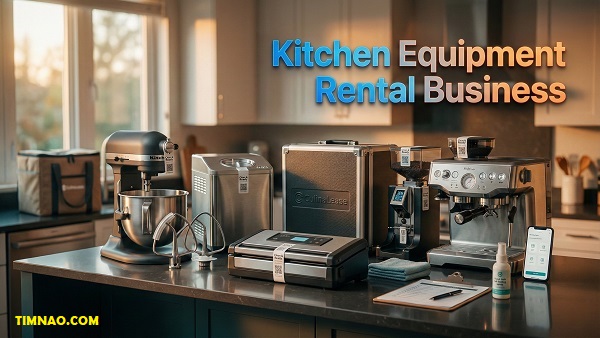
Kitchen Equipment Rental Business: a Practical, Proven CulinaLease Blueprint ★
Kitchen equipment rental business opportunities are growing fast as more home creators, micro food brands, and premium shoppers prefer access over ownership—especially for expensive appliances they only need a few times a year. CulinaLease is a practical, modern take on this trend: a managed “Try–Rent–Own” service that delivers high-end kitchen gear, sanitizes and inspects it between uses, and reduces customer anxiety with clear protection and policies. If you’ve ever hesitated to buy a $700–$2,000 appliance “just to test it,” this model is built for that exact moment.
In this guide, you’ll learn how to launch CulinaLease the realistic way—starting small, validating demand in weeks (not months), and building operations that customers actually trust. You’ll also see how to structure pricing, partnerships, and a membership-with-credits approach so the business can repeat revenue without relying on hype or heavy upfront inventory.
CulinaLease in plain English: a managed “try, rent, and (sometimes) buy” service
If you’re exploring a kitchen equipment rental business, CulinaLease is a simple name to remember: it’s short for “Culinary Lease”, meaning renting cooking/kitchen equipment. In this article, I use CulinaLease as a working brand name for a modern rental model that fits what customers expect today.
This is not a casual peer-to-peer swap where strangers hand appliances to each other. CulinaLease is a managed rental service. You curate a small, high-quality catalog of premium kitchen machines, deliver them to the customer, pick them up after use, and run a consistent turnaround process—cleaning, inspection, and readiness checks—so people feel safe renting equipment that touches food.
The real product isn’t only the mixer or the ice cream machine. The product is the standard you deliver every time: clean and functional equipment, the right accessories included, clear instructions, and policies that prevent awkward surprises. In other words, customers pay for reliability and convenience, not just a cheaper alternative to buying.
The experience can follow one straightforward path: Try → Rent → (Sometimes) Buy. Some customers rent for a weekend project. Others rent for a seasonal run. And some want a short “trial” before deciding to purchase. If you choose to offer a buy option, the rental fee can be credited toward purchase only when you’ve set up that arrangement with a retail or brand partner—so it’s an optional feature, not something you must promise for every item.
From a founder’s perspective, this is an operations-led business marketed online. A website helps customers discover and book, but your real advantage is what happens after someone clicks “Reserve”: dependable delivery windows, a repeatable sanitation workflow, quick quality checks, and a system that prevents missing parts, unclear fees, and last-minute cancellations.
Idea Snapshot (keep this as your one-page reference):
- Ideal customers: serious home cooks, baking hobbyists, creators, micro food businesses, and premium appliance retailers/brands that want at-home trials
- Core offer: premium kitchen equipment rental with delivery/pickup plus a documented turnaround process (cleaning, inspection, readiness check)
- Signature hook: a managed experience with an optional Try → Rent → (Buy) pathway where it makes sense
- First traction channel: partnerships (retailers/brands, shared kitchens, culinary schools) + local hobby/creator communities
- Starter pricing: mid-to-premium rental rates plus delivery/turnaround fees, with an optional membership/credits plan for frequent renters
- Time to first sale signal: 7–14 days if you can confirm supply and pre-sell a small pilot
- Startup cost range: lower with partnerships/consignment; higher if you purchase inventory upfront
- Early success metric: 10 paid bookings completed smoothly (on-time, clean-ready, low issues) and a few repeat customers—rather than app downloads
Why this works now: access-over-ownership, small brands, and smarter renting
CulinaLease isn’t a new desire. People have always wanted to avoid buying expensive tools they rarely use. What’s changed is that consumers now expect “access” to feel as smooth as “purchase,” and businesses have learned how to operationalize renting at scale.
You can see this pattern clearly in other categories. Electronics rental subscriptions like Grover have normalized the idea of using a product, returning it, and having it cleaned and recirculated for the next customer. (Grover) This isn’t about copying Grover’s product line; it’s about copying the operational logic: managed assets, standardized refurbishment, repeat rentals.
Meanwhile, peer-to-peer rental marketplaces like Fat Llama and Hygglo show that renting can scale when platforms build trust via verification and guarantees. (Y Combinator) CulinaLease takes the next step by moving from “platform guarantees” to “service guarantees”—because kitchen gear has higher stakes around hygiene, damage, and performance.
One more important point: “Try before you buy” has proven demand across ecommerce. Even Amazon ran a Try Before You Buy program for apparel, then discontinued it—partly because reverse logistics and returns are expensive to operate at scale. (AP News) That’s a useful lesson for CulinaLease: trials are powerful, but only when you design them with tight operations, clear policies, and pricing that covers the real cost of moving products back and forth.
So the “why now” isn’t hype. It’s that the playbook for renting physical goods has matured—and the premium kitchen category is still under-served by beginner-friendly, trust-first experiences.
The Idea Snapshot: a one-page view of the business
Before you design a logo or build an app, lock in your business definition. This is the shortest version I’d mentor you to memorize:
CulinaLease is a premium kitchen appliance rental service that delivers, sanitizes, inspects, and protects high-end equipment—so customers can rent tools for projects or seasons, or trial them before buying.
Now translate that into a simple engine:
Assets + SOPs + last-mile logistics → trusted rentals → repeat bookings and partner conversions.
If you keep that sentence honest, you’ll avoid the two most common traps:
- building a marketplace before you have supply and trust, and
- buying too much inventory before you know which items renters truly want.
At the start, your goal is not “many categories.” Your goal is a narrow catalog that rents often, with operations so clean that customers stop worrying and start planning their next booking.
A kitchen appliance rental service can serve many people. That doesn’t mean you should. Pick 2–3 customer segments (ICPs) and build the first version specifically for them.
ICP 1: Serious home creators who want pro outcomes
These are people who love cooking, baking, coffee, or fermentation as a real hobby. They may already own a decent stand mixer, but they want to try a premium model, a better grinder, or a specialized machine for a specific project.
They pay because they want to de-risk a big purchase and avoid clutter. Their emotional driver is “I want to do this right,” and their practical driver is “I don’t want to spend $1,000 for one holiday season.”
What they rent first usually looks like:
- a high-end mixer for holiday baking
- an ice cream machine for summer
- espresso gear for hosting or content
- dehydrators/vacuum sealers for meal-prep experiments
ICP 2: Micro food businesses and pop-ups
These customers care less about brand names and more about reliability and speed. They need gear for a peak period: a weekend market, a catering job, a seasonal menu, a short production run.
They pay because buying would be a capital drain. Renting also reduces downtime risk—if your service includes swap-outs or support.
This ICP is ideal for:
- month-long rentals
- bundle rentals (a “bakery kit”)
- predictable recurring demand during seasonal spikes
ICP 3: Creators and small studios who need “gear for content”
Food creators rent differently. They care about performance, aesthetics, and flexibility. They may need a machine for one filming day, then another tool next week.
They pay because they’re optimizing production quality without buying a full commercial setup. If you offer reliable delivery windows and clean gear, they’ll become your loudest marketing channel.
ICP 4: Premium appliance brands and retailers
This is your strategic ICP because it can reduce your startup cost. Brands want qualified customers to experience premium appliances in real kitchens, not just in-store demos.
This is exactly the logic behind rental and subscription models in other hardware categories—brands and retailers partner to drive adoption and reduce purchase anxiety. (Grover)
If you can become the operational partner that makes trials easy, you get:
- inventory access (consignment or discounted fleet units)
- referral volume
- potential commissions on conversions
Most first-time founders underestimate what customers are really buying. Customers are not buying “a cheaper way to use a mixer.”
They’re buying relief from five hidden ownership costs:
1) Purchase regret risk
Premium appliances are notorious for being “dream purchases” that become occasional-use items. Renting turns a high-stakes decision into a low-stakes experiment.
2) Storage and clutter tax
In dense urban living, space is expensive. Customers will pay to avoid owning bulky equipment.
3) Maintenance and breakdown anxiety
Even simple machines can fail at the worst time. If you offer tested gear and support, you remove stress that’s hard to price but easy to feel.
4) Hygiene uncertainty
Anything that touches food creates trust questions. A well-designed sanitation process is not a detail—it’s your conversion rate.
5) Timing mismatch
People don’t need an ice cream machine all year. They need it this month. Rental aligns cost with usage.
The core insight: CulinaLease is not competing with “buy new.” It’s competing with “buy and regret,” “buy used and gamble,” and “do nothing because it’s too expensive.”
Offer design that wins: trial rentals, project bundles, and membership credits
A strong offer design makes your marketing easy because the promise is clear. Here’s a practical structure that keeps things simple while still giving you multiple revenue levers.
The core catalog: “hero SKUs” only
Start with 10–20 items that are:
- expensive to buy
- frequently needed for a specific outcome
- durable enough to handle repeated rentals
- easy to sanitize and check quickly
Avoid appliances that require complex installation or specialized safety compliance until you have stronger SOPs.
Offer 1: Trial rentals that credit toward purchase
This is the “Try–Rent–Own” hook. You rent a device for 3–7 days, and if the customer buys (through your partner or you), the rental fee becomes a credit.
This offer works because it mirrors a familiar retail behavior. But you must price it to cover reverse logistics. Amazon’s experience with try-before-you-buy is a reminder: trials can be expensive if you underprice the handling and return process. (AP News)
A mentor rule: don’t treat trials like “cheap samples.” Treat them like “premium demos delivered to your door.”
Offer 2: Project rentals for weekends and short runs
This is for home creators and creators. It’s outcome-oriented:
- “Gelato weekend”
- “Holiday baking week”
- “Espresso setup for hosting”
These offers are easy to market because they map to a moment, not a product feature list.
Offer 3: Membership plus credits for repeat renters
Hard subscriptions (flat monthly) often break in rental businesses because demand is seasonal. A membership + credits model is easier to manage:
- members pay a monthly fee
- they receive credits to use on rentals
- they get perks like reduced deposits, priority booking, and lower delivery fees
This structure stabilizes cash flow without forcing customers into a plan they’ll cancel during off months.
Offer 4: Bundles and “kits”
Bundles increase your average order value and reduce decision fatigue. A bundle also makes inventory utilization more predictable.
Examples:
- Bakery kit: mixer + extra bowl + specialty attachments
- Coffee kit: grinder + brewer + scale
- Preservation kit: dehydrator + vacuum sealer (with clear accessory rules)
What not to do (positioning pitfalls)
If you want to avoid confusion and churn, avoid these early mistakes:
- Don’t promise “anything, anytime.” You’ll break operations.
- Don’t launch as P2P unless you love dispute resolution and inconsistent quality.
- Don’t hide cleaning and delivery fees until checkout. Pricing surprises kill trust.
- Don’t build an app before you prove booking demand with a simple site.
The revenue engine for a kitchen equipment rental business
Now let’s make the “money loop” explicit. This is where many founders get vague, and vagueness is expensive.
Here’s the diagram-in-words:
Inventory access (owned or partner fleet) → standardized turnaround (pickup, clean, inspect, re-pack) → reliable availability → paid rental + service fees → repeat use via membership credits → conversions to purchase via partners → more inventory access and better terms.
You make money repeatedly because the same asset can generate revenue many times. The entire game is making the asset rentable often without degrading customer trust or incurring excessive repair costs.
Core revenue streams
- Rental fees (daily, weekly, monthly)
- Delivery and pickup (or included with tiered pricing)
- Cleaning/reset fees (bundled or itemized)
- Membership fees (credits + perks)
- Damage waiver / protection (optional add-on)
- Late fees / replacement (rare but must exist)
- Conversion commissions from retailers/brands when trials become purchases
Core cost drivers
- asset acquisition (purchase, lease, consignment terms)
- depreciation and refurbishment
- delivery labor/courier fees
- cleaning time and supplies
- payment processing, customer support, chargebacks
- damage and loss
This model is “simple” only if you track the right metrics. Your most important leading indicator is utilization: how many rental days each unit produces per month.
Lean validation plan: 30 days to the first 10–20 customers
If you’re starting from zero, you want validation that answers one question:
Will people pay for the fully managed experience, not just the appliance?
Here is a practical 30-day plan that avoids heavy upfront spending.
Week 1: pre-sell the experience with a simple landing page
Your landing page does not need a cart. It needs clarity:
- What you rent (10–20 items)
- Where you serve (tight area)
- How it works (deliver → use → pickup → sanitized)
- What it costs (ranges, not perfect pricing)
- A waitlist or booking request
Tools you can use without engineering:
- landing page:
https://carrd.coorhttps://webflow.com - form:
https://tally.soorhttps://typeform.com - scheduling:
https://calendly.com - payments/invoices:
https://stripe.comorhttps://squareup.com
Keep it simple. Your goal is responses, not design awards.
Week 2: secure supply without buying everything
In parallel, source inventory in three ways:
- Retailer/brand trial units (consignment or revenue share)
- high-quality used gear (refurbish and standardize)
- commercial rental suppliers for overflow capacity (this exists in the market) (Mobile Kitchen Solutions)
Commercial kitchen rental providers demonstrate that renting pro equipment is already normal in many contexts. (Mobile Kitchen Solutions) Your differentiated angle is packaging it for home creators and micro businesses with a premium, consistent process.
Week 3: run a pilot with 10 “concierge” bookings
Do not try to automate yet. Manually manage:
- booking confirmation
- deposit collection
- delivery/pickup scheduling
- inspection photos
- cleaning and re-packaging
That concierge approach gives you learning speed. Automation comes after repetition.
Week 4: review the numbers and decide what to double down on
After 10–20 rentals, you should know:
- which 5 items are most requested
- what your true cleaning time is
- where damage happens (accessories are common pain points)
- which customer segment is easiest to acquire
- whether your pricing covers your costs
Validation hypotheses table (use this as your scoreboard)
| Hypothesis you need to prove | Test you run | Success metric | Timeframe |
|---|---|---|---|
| People will pay for “managed rentals” (not just cheap rentals) | Offer delivery + sanitation + protection baked in | 10 paid bookings with low objections on cleanliness | 14 days |
| Trial rentals convert into purchases | Partner with 1 retailer/brand on a single hero SKU | 10 trials and at least 1–2 serious purchase leads | 30 days |
| The unit turnaround is operationally feasible | Track clean + inspect + re-pack time per item | < 60–90 minutes turnaround labor per rental cycle | 30 days |
| Utilization is high enough on hero SKUs | Start with 5–10 units and track rental days | 6–10 rental days per unit per month on best items | 30–45 days |
| Delivery cost won’t kill margin | Run a tight service radius and batch routes | Delivery cost under your planned fee threshold | 30 days |
| Customers will repeat | Offer credit-based referral or member perks | 20–30% of customers book again within 60 days | 60 days |
These numbers are directional. The point is to measure reality, not to chase “perfect” benchmarks.
Pricing and unit economics: utilization, contribution margin, and churn
Pricing in rental businesses can feel messy because there are multiple moving parts. The easiest way to stay sane is to price around contribution margin per rental cycle.
Start with a pricing model that customers understand
Most customers understand three levers:
- rental duration (day/week/month)
- delivery/pickup (included or added)
- protection (included or added)
A beginner-friendly structure:
- Standard rental: base rate + delivery
- All-in rental: higher base rate, delivery included, protection included
- Member rate: monthly membership + discounted rentals using credits
A simple unit economics example (hypothetical, for thinking)
Imagine one premium mixer unit.
- Monthly utilization: 8 rental days
- Rental price: $25/day equivalent (could be higher or lower in your market)
- Gross rental revenue: 8 × $25 = $200/month
Now costs per rental cycle:
- cleaning labor + supplies: $12
- average delivery/pickup subsidy after fees: $18
- repair reserve (average): $10
- payment fees + support allocation: $5
If one rental cycle is 2 days (4 cycles/month), your cost might be:
4 × ($12 + $18 + $10 + $5) = 4 × $45 = $180
Contribution margin: $200 − $180 = $20/month for that unit.
That margin is not impressive, which tells you something important: you either need (a) higher utilization, (b) better delivery economics, (c) higher pricing, (d) lower cleaning time, or (e) bundles/memberships that raise effective revenue per stop.
This is why operational design matters more than copywriting.
The three levers that usually fix unit economics
1) Utilization (rental days/unit/month)
Higher utilization spreads fixed ownership cost over more revenue.
2) Revenue per stop
Bundles, longer rentals, and member plans raise revenue without increasing delivery count.
3) Cost per turnaround
If cleaning and inspection are standardized, your labor time drops quickly.
Starter pricing guidance (what to charge first vs later)
Early on, price slightly “premium” rather than “cheap,” because you’re selling trust and service.
- Charge enough to cover delivery and cleaning from day one.
- Use “founding member” perks to reward early adopters without lowering your whole market price.
- After validation, introduce memberships and bundles to improve margins.
Operations blueprint: sourcing inventory, hygiene SOPs, and reverse logistics
This is the backbone. If operations are strong, almost everything else gets easier.
Sourcing inventory without drowning in upfront costs
Use a three-lane approach:
Lane A: Partner fleet (best for starting lean)
Work with retailers/brands on trial units. Grover highlights how partner networks can support rental distribution alongside direct channels. (Grover)
Lane B: High-quality used gear (best for margins)
Buy used premium items in excellent condition, refurbish, standardize accessories, and track condition at each cycle.
Lane C: Commercial rental suppliers (best for overflow and learning)
Companies exist that rent commercial kitchen equipment and even turnkey solutions. (Mobile Kitchen Solutions) You can learn a lot from their category choices, packaging, and policies.
Reverse logistics as a simple SOP, not a buzzword
Reverse logistics is just “the return journey,” but it needs to be controlled.
A practical SOP per rental:
- Dispatch check (photos, serial/QR, accessory count)
- Delivery handoff (customer acknowledgement, quick usage rules)
- Pickup check (quick inspection + accessory count)
- Intake clean (food-contact cleaning + exterior wipe-down)
- Functional test (short test cycle)
- Repack and seal (Clean & Ready tag with timestamp)
- Maintenance log (noting wear or upcoming service)
Hygiene confidence: make it visible
Customers don’t only want you to clean. They want to believe you cleaned.
Simple touches that boost trust:
- sealed packaging after cleaning
- a one-page “cleaning checklist” card in the box
- the last-cleaned date and who signed it
- clear rules on what customers must do before pickup
You’re turning hygiene into a feature, not a hidden cost.
Damage protection and deposits
You should expect minor wear and occasional damage. Your job is to make it predictable.
- Deposit/hold: a refundable amount that covers loss and discourages abuse
- Damage waiver: optional coverage that reduces customer anxiety
- Clear thresholds: define what counts as normal wear vs billable damage
Peer-to-peer platforms like Hygglo highlight the value of guarantees and verification in making rentals feel safe. (Hygglo) CulinaLease can go one level further by pairing policies with standardized inspection and clean-room style handling.
The first traction channel: retailer partnerships and B2B2C referrals
If you want the fastest path to supply and customers, start with partnerships.
Here’s why partnerships are the best “first channel” for CulinaLease:
- they can unlock inventory without heavy capital
- they provide warm leads
- they create a conversion path from trial to purchase
Grover’s own materials show an example of operating through both direct and partner networks. (Grover) You can replicate this pattern at a smaller scale locally.
Who to partner with first
- premium appliance retailers and showrooms
- specialty coffee equipment shops
- culinary schools (student projects + classes)
- shared kitchens and incubators
- boutique cookware stores with high-end demo units
A simple partnership pitch (email/DM template)
Subject: Trial rentals to increase premium appliance sales
Hi [Name] — I’m building CulinaLease, a managed “try at home” rental service for premium kitchen equipment. We handle delivery, sanitation, inspection, and customer deposits, so shoppers can experience [Brand/Product] in a real kitchen for 3–7 days.
If a customer buys, we can credit the rental fee toward purchase and send you qualified leads. You get higher-intent buyers and fewer “buy-and-regret” returns; we get inventory access and conversion commissions.
Would you be open to a 15-minute call to test this with one hero SKU for 30 days?
— [Your Name]
This is straightforward and grounded. Retailers and brands care about conversion and customer satisfaction, not startup buzzwords.
How to structure the deal (beginner-friendly options)
Start with terms that are simple and reversible:
- consignment trial fleet: they provide units; you share rental revenue + pay referral fees
- discounted purchase + buyback: you buy at wholesale; they buy back certain units after X cycles
- conversion commission: you receive a % when trials convert
Keep the pilot small: one SKU, one month, clear reporting.
Content-led growth: TikTok, community groups, and local SEO pages
Partnerships give you supply and warm leads. Content gives you gravity over time.
The smartest content for CulinaLease is not “product reviews.” It’s “outcome demos.”
TikTok and Reels: show outcomes, not catalog pages
Creators and home cooks don’t want a spec sheet. They want proof that the tool unlocks a result.
Content angles that work:
- “I rented a pro mixer for 48 hours—here’s what I made.”
- “Gelato weekend: is an ice cream machine worth buying?”
- “The 3 mistakes people make with premium espresso gear.”
- “How a home baker scaled production with rented equipment.”
If creators are a target ICP, you can also rent gear to creators at a discount in exchange for a tagged demo. Done ethically, this can be one of your lowest-cost customer acquisition loops.
Community groups: the underrated early growth lever
Local Facebook groups, hobby forums, and community chats can generate your first 10 customers faster than ads. These people already talk about tools, recipes, and upgrades.
Your outreach should be simple:
- introduce the service and your area
- offer 5 “founding rentals” with priority booking
- ask what people want to rent next month
Avoid sounding like an ad. Sound like a useful local service.
Local SEO: build pages around “rent [item] in [city]”
Once you know your hero SKUs, create focused pages:
- “Stand mixer rental in [City]”
- “Ice cream machine rental for home in [City]”
- “Espresso grinder rental in [City]”
Keep the pages honest: include availability rules, delivery radius, and what’s included (cleaning, protection, accessories). This is how you attract high-intent searches without a huge ad budget.
Risks and compliance: damage, food safety, liability, and disputes
A business that moves physical assets into kitchens must treat risk as a design constraint, not a footnote. This section is not legal advice; it’s a practical risk checklist you can discuss with a local professional.
Risk 1: Damage and missing accessories
Accessories go missing more often than the main unit. Solve with:
- accessory inventory checklist at dispatch and pickup
- clear replacement fees
- “accessory pouch” that is sealed and counted
Risk 2: Hygiene disputes and customer trust
Even if you clean perfectly, perception matters. Solve with:
- visible “Clean & Ready” seals
- a cleaning checklist card
- clear customer responsibilities (e.g., rinse and dry before pickup)
If you ever make hygiene a “trust me” promise, you’ll lose.
Risk 3: Delivery costs exceed what you charge
This is one of the most common failure modes. Solve with:
- tight service radius early
- delivery batching windows (two pickup/delivery days per week)
- premium fees for heavy items and stairs
- minimum order size for free delivery (bundles help)
Risk 4: Liability from misuse
Some equipment can be dangerous if misused. Solve with:
- safety guides and quick-start cards
- customer acknowledgment at delivery
- optional short onboarding video
- clear restrictions (no commercial use unless stated, etc.)
Risk 5: Chargebacks and payment disputes
Rentals are chargeback-prone if policies are unclear. Solve with:
- transparent terms
- photo evidence on dispatch and return
- signed acknowledgments
- deposit holds collected in advance
Risk 6: Inventory utilization stays too low
If utilization is low, the business becomes a warehouse. Solve with:
- ruthless catalog pruning
- outcome-based bundles
- partner-driven trials
- membership credits to pull demand forward
Risk 7: Overbuilding software too early
Software doesn’t fix a messy operation. Solve with:
- manual process first
- automate only repeated steps
- use off-the-shelf tools until you have product-market fit
Risk 8: Insurance and coverage gaps
Some platforms highlight “insured rentals” as a core trust builder. (Y Combinator) For a managed model like CulinaLease, explore:
- general liability coverage
- equipment coverage
- optional customer damage waivers
Talk to an insurance broker who understands rentals and third-party property.
Scale paths and a 7-day action plan to start today
Once you have repeatable rentals and positive unit economics on hero SKUs, scaling becomes much more predictable. Until then, scaling is mostly adding complexity.
Scaling option 1: Expand the partner fleet
Partnerships can grow into a network. Grover’s model shows the advantage of having both direct and partner distribution pathways. (Grover) If you can prove you drive conversions, brands will give you better terms.
Scale trap: signing too many partnerships before you can meet delivery and hygiene SLAs.
Scaling option 2: Add micro-hubs or pickup points
Libraries of Things demonstrate that lending and borrowing can work through local points and managed inventory. (Library of Things) A hub model can reduce delivery costs if customers are willing to pick up.
Scale trap: investing in lockers/hubs before you have enough bookings to justify them.
Commercial kitchen equipment rentals already exist in the market, and that proves demand for renting pro gear in professional contexts. (Mobile Kitchen Solutions) You can productize your service as a “fleet plan” for programs that need reliable equipment access.
Scale trap: taking on corporate contracts without maintenance capacity and spare units.
Scaling option 4: Add categories carefully
After your first category works, expand logically:
- baking → pastry tools
- coffee → brewing accessories
- preservation → fermentation tools
Scale trap: “catalog sprawl.” More SKUs often reduce utilization unless you have demand density.
Key takeaways worth remembering
- CulinaLease wins by selling a managed experience: clean, tested, protected, and easy.
- Your first moat is operational: hygiene SOPs, inspection, and reverse logistics.
- Partnerships are the fastest path to supply and qualified customers.
- Membership credits and bundles improve utilization and delivery economics.
- Validate with 10–20 paid bookings before you buy too much inventory.
Your 7-day next-step checklist
Day 1: Pick your first ICP (home creators, micro businesses, or creators) and commit for 30 days.
Day 2: Choose 10 hero SKUs and write a one-sentence “why rent this” for each.
Day 3: Build a simple landing page + booking form + pricing ranges.
Day 4: Contact 10 potential partners (retailers, schools, shared kitchens) with the trial program pitch.
Day 5: Post in 3 local communities with a founding rental offer and a waitlist link.
Day 6: Run 2 concierge bookings end-to-end, documenting every step and time cost.
Day 7: Review utilization, delivery cost, cleaning time, and customer feedback—then refine the SOP and pricing.
CulinaLease is promising because it aligns with how people increasingly want to live: enjoy premium outcomes without being stuck owning premium clutter. If you build the trust layer with discipline—and validate demand before you scale—you’ll have a business that feels genuinely useful, not just clever.
FAQs: Beginner Questions About Kitchen Equipment Rental Business Answered
1) Do I need an app to start?
No. For your first 10–20 bookings, an app is usually a distraction. A simple landing page, a booking form, and a calendar are enough. What matters most early is whether you can deliver a smooth experience: on-time delivery, clean equipment, clear policies, and fast support when something goes wrong.
Once you have repeat customers and a predictable workflow, you can upgrade to a proper booking system or build an app later. Until then, keep it lean and operationally focused.
2) What equipment should I rent first?
Start with “hero items” that are expensive to buy, easy to understand, and commonly needed for specific outcomes. Think stand mixers, ice cream machines, espresso grinders, dehydrators, and vacuum sealers. Avoid items that require complex installation, specialized electrical work, or highly technical calibration until your operations are stable.
A good rule: pick items that customers can use confidently with a quick-start guide and that you can test in under 10 minutes.
3) How do I price rentals if I don’t know my costs yet?
Price in a way that forces you to learn your costs quickly without losing money on each booking. Early pricing should include (or clearly add) your real cost drivers: delivery, cleaning/reset time, and a small repair reserve. If you underprice to “get users,” you risk training the market to expect low prices while your costs stay real.
Start with simple tiers (day/week/month) plus a delivery/turnaround fee, then refine after your first 10 bookings based on actual time and expense data.
4) Should I run this as P2P (peer-to-peer) to avoid buying inventory?
Most beginners underestimate how much time P2P requires in disputes, quality control, and trust-building—especially for equipment that touches food. A managed model is usually easier to standardize and scale because the experience is consistent.
If you do experiment with P2P, treat it as “supply sourcing,” not your core model. You still need standardized cleaning, inspection, deposits, and clear policies—or the service becomes hard to trust.
5) How do I make customers trust the hygiene?
Make hygiene visible and standardized. Use sealed packaging after cleaning, include a simple checklist card (“Cleaned, inspected, test-run, accessories verified”), and show a timestamp for the last sanitation. When customers see a consistent process, they stop worrying and start focusing on what they want to make.
Also be clear about what customers must do before pickup (for example: rinse removable parts, empty liquids, wipe external surfaces). Trust improves when expectations are explicit.
6) What if a customer damages the equipment?
Assume some damage will happen and design your system around it. Use deposits/holds, inspection photos before and after, and clear definitions of normal wear versus billable damage. You can also offer a damage waiver add-on that reduces customer anxiety while protecting your downside.
The key is to avoid awkward negotiations. Your policy should make outcomes predictable for both sides.
7) How do I handle missing parts and accessories?
Accessories are the most common headache in rental businesses. Treat them like inventory, not “extras.” Pack accessories in a dedicated pouch or box, seal it, and count items at delivery and pickup. Use QR labels and a checklist so you can quickly verify everything.
If something goes missing, charge a transparent replacement fee. When fees are clear upfront, disputes drop dramatically.
8) Do I need insurance?
In many places, some form of liability coverage is strongly recommended for rental businesses—especially when equipment is used in homes and kitchens. Coverage options vary by country, so speak with a local insurance broker who understands rentals and third-party property.
Even with insurance, you still need deposits, waivers, and good documentation. Insurance is a backstop, not your day-to-day risk system.
9) What’s the easiest way to get my first 10 customers?
Start where people already talk about kitchen gear: local baking groups, coffee communities, creator circles, culinary schools, and shared kitchens. Offer a small “founding customer” pilot: limited slots, a clear service area, and one or two hero items you can deliver flawlessly.
You’ll win early customers by being specific: “Ice cream machine rentals this weekend in [Area]—delivered clean and ready.” Specific offers feel real and reduce hesitation.
10) How do I find inventory without spending a lot upfront?
Start with partnerships and consignment. Retailers and brands may provide demo units or trial inventory if your service can generate qualified leads and reduce buyer hesitation. You can also source high-quality used equipment and refurbish it with consistent packaging and testing.
Avoid buying a large catalog early. It’s better to have a small set of popular items that rent often than a warehouse of “maybe” equipment.
11) What metrics should I track from day one?
Track the few numbers that actually control the business:
- Utilization: rental days per unit per month
- Turnaround time: cleaning + inspection time per cycle
- On-time rate: deliveries/pickups completed as promised
- Issue rate: % of rentals with problems (missing parts, damage, complaints)
- Repeat rate: % of customers who book again within 60 days
If you track these consistently, pricing and scaling decisions become much easier.
12) When should I introduce membership or subscriptions?
Add membership once you have repeat behavior and you understand your true operating costs. A membership + credits model usually works better than a rigid subscription because kitchen equipment demand is seasonal. Customers stay happier when they can use credits flexibly instead of feeling “locked in.”
A good signal to launch membership is when you see customers renting 2–3 times within a few months and asking for discounts or priority access.
13) What are the biggest beginner mistakes to avoid?
Three mistakes show up over and over:
- Buying too much inventory before validating demand
- Underpricing delivery and cleaning, then losing money quietly
- Expanding the service area too early and breaking the experience
If you protect operational quality, the business has room to grow. If you sacrifice quality for speed, you’ll spend months cleaning up reputation damage.
14) How do I know if this business is “working”?
Look for operational proof, not vanity metrics. A strong early signal is: 10–20 paid rentals completed smoothly, a low issue rate, and customers who ask, “What else can I rent?” Another strong signal is when a partner retailer wants to expand the trial program because they’re seeing better buyer intent.
If your first customers trust you, you’re building something real—and trust is the hardest part to copy.
Disclaimer: This article is for educational and informational purposes only and does not constitute legal, financial, tax, or insurance advice. Business results vary based on factors such as market demand, pricing, operating costs, local regulations, and execution. Before starting a kitchen equipment rental business, you should conduct your own research and consult qualified professionals (e.g., an attorney, accountant, and insurance broker) to ensure compliance with applicable laws, health/sanitation requirements, and safety standards. Any examples, pricing ranges, tools, or operational suggestions are illustrative and should be adapted to your location and circumstances.
If this guide helped you move one step closer to launching your kitchen equipment rental business, you can support my work with a coffee. ☕️✨ Every coffee helps me keep publishing practical, step-by-step startup playbooks (and updating them with real-world insights).
👉 Buy me a coffee here: https://timnao.link/coffee 🚀





 (Business Idea #12))