
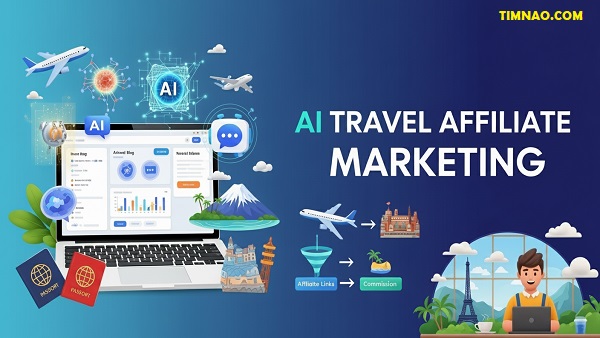
Effortless AI Travel Affiliate Marketing: Proven Moves Beginners Love 🚀
AI travel affiliate marketing isn’t just a trendy buzzword — it’s one of the most exciting ways to turn your passion for exploring the world into a steady stream of online income. Whether you dream of working from a beach café in Bali, funding your next backpacking trip through Europe, or simply building a flexible side hustle from home, this beginner-friendly business model can make it happen.
The beauty of affiliate travel marketing lies in its simplicity: you share helpful travel content, connect your audience to useful services like hotels, tours, and insurance, and earn commissions every time someone books through your links. And thanks to AI tools, even complete beginners can now automate research, speed up content creation, and make smarter data-driven decisions — saving countless hours while boosting results.
But while the potential is huge, success doesn’t come from posting random travel tips and waiting for clicks. You need a clear roadmap — one that combines smart niche selection, trustworthy website design, optimized SEO, and practical monetization strategies. This guide is designed to walk you through exactly that: step-by-step strategies, real-world examples, and actionable tips you can start applying today, even with zero tech or marketing experience.
Let’s dive in and explore how you can build a profitable, AI-powered affiliate travel website from scratch — and transform your wanderlust into a sustainable online business.
Table of Contents
- 🧭 Getting Started the Smart Way
- 🧩 Pick a Niche You Can Win
- 🧱 Set Up WordPress Without Headaches
- 🎨 Design for Trust & Clicks
- ⏱️ AI Tools That Save Hours
- ✍️ Write Content People Actually Use
- 🔎 SEO Basics That Move the Needle
- 💸 Monetization: From Links to Real Income
- 🚦 Traffic Engines: Organic, Social, Email, Ads
- 📊 Analytics & A/B Testing Made Easy
- 🧾 Legal, Compliance & Ethics You Shouldn’t Skip
- 📈 Scale to $500/Day and Beyond
- 🧯 Troubleshooting: Fix What’s Slowing You Down
- 📅 Your 14-Day Launch Plan
- ✅ Key Lessons & Takeaways
🧭 Getting Started the Smart Way
If you’re stepping into the world of AI travel affiliate marketing for the first time, congratulations — you’re about to explore one of the most practical and scalable online business models today. Unlike many “make money online” schemes that require complex skills or large upfront investments, affiliate marketing in the travel space is both beginner-friendly and genuinely useful. It allows you to turn your love for travel — or even just your interest in helping others travel — into a consistent income stream.
At its core, the model is simple: you create helpful content about travel (like guides, itineraries, hotel recommendations, or comparison posts). When readers click on your affiliate links and make a booking — whether it’s for a flight, hotel, travel insurance, or a local experience — you earn a commission. Thanks to AI, the process of building, growing, and automating this type of website is now faster and easier than ever.
But simplicity doesn’t mean you should jump in blindly. Beginners often make the mistake of rushing into content creation without a clear strategy, and that almost always leads to frustration. The smartest way to begin is to focus on strategy over speed, building a strong foundation before scaling. Here’s how to do that.
Understand How the Affiliate Model Works
The best way to approach this business is to view yourself as a bridge between travelers and solutions. People planning trips search online for answers to questions like:
- “Best neighborhoods to stay in Rome”
- “3-day Tokyo itinerary for first-time visitors”
- “Top family-friendly tours in Paris”
Your job is to answer those questions clearly and helpfully — and guide them toward the right services through affiliate links.
Here’s how the process works step-by-step:
- Attract visitors: They find your website through Google, social media, or Pinterest.
- Provide value: They read your content and learn from your expertise.
- Recommend solutions: They click your affiliate links to book hotels, flights, tours, or insurance.
- Earn commissions: You receive a percentage of each booking — often ranging from 3% to 50%.
For example, if you write a guide to “Top 10 Boutique Hotels in Lisbon” and a reader books a $1,000 stay via your affiliate link, you might earn $50 or more from that one article.
How AI Supercharges the Process
The rise of AI has completely transformed how quickly beginners can get results. In the past, you’d have to spend hours researching topics, writing articles, designing images, and analyzing SEO data. Now, AI tools can automate or accelerate nearly every step:
- Research: AI tools can find trending destinations, popular search terms, and profitable affiliate opportunities.
- Content: AI writing assistants can help you draft SEO-optimized articles and rewrite existing content quickly.
- Visuals: AI design tools can create high-quality featured images, infographics, and social media posts.
- Analytics: AI analytics platforms can spot patterns in user behavior and recommend next steps.
This doesn’t mean AI replaces you. It means you spend less time on repetitive tasks and more time focusing on strategy, quality, and creativity — the things that truly move the needle.
Common Beginner Mistakes to Avoid
Before we move on, let’s address a few pitfalls that trip up new affiliate marketers:
- Going too broad: A “general travel site” is too competitive and unfocused. Specializing is key.
- Signing up for too many affiliate programs: Start with two or three strong partners and master them first.
- Publishing random posts: Every article should solve a problem and guide readers toward a solution.
- Ignoring SEO: If your content isn’t optimized for search, no one will find it.
- Giving up too soon: It usually takes 3–6 months to see steady results. Be patient and consistent.
If you avoid these mistakes and stay focused on building step-by-step, you’re already ahead of 90% of beginners.
🧩 Pick a Niche You Can Win
The next major step is choosing your niche — and this is one of the most important decisions you’ll make. Think of your niche as the lane you’re going to dominate online. Many beginners skip this step and try to write about “travel” in general. That almost always fails because the competition is too intense.
A well-chosen niche, on the other hand, makes everything easier: it’s simpler to rank on Google, your audience is more targeted, and your recommendations feel more relevant and trustworthy.
Why Narrowing Your Focus Is Crucial
The internet rewards specialists, not generalists. A site with 50 detailed posts about “eco-friendly island travel” will outrank a site with 500 random travel posts every time. Readers also trust specialists more — just like you’d rather visit a sushi restaurant than a “we serve everything” buffet.
The more specific you are, the faster you build authority and the easier it is to convert readers into buyers.
How to Choose a Profitable Niche (4 Golden Rules)
- Audience clarity: Define exactly who you’re serving. Are they solo travelers, digital nomads, families, or eco-conscious travelers?
- Commercial depth: Make sure the niche connects naturally to bookable products (e.g., hotels, tours, rail passes, travel insurance).
- Content runway: You should be able to brainstorm at least 50 article ideas in your niche. If not, it might be too narrow.
- Personal interest: Choose a topic you genuinely enjoy. It’s easier to stay consistent and sound authentic.
Real Niche Examples That Work
Here are a few proven niche ideas with strong earning potential:
- Sustainable island escapes: Focus on eco-lodges, reef-safe snorkeling tours, and ferry itineraries.
- Luxury train travel: Compare train routes, sleeper cabins, and scenic journeys.
- Family city breaks: Highlight stroller-friendly attractions, family suites, and kid-friendly restaurants.
- Workation travel: Create guides for long-term stays, co-working spaces, and remote work visas.
- Layover itineraries: Offer 24–48-hour plans for travelers with short stopovers.
Each of these niches is specific, commercially rich, and content-friendly — exactly what you want.
Validate Before You Commit
Before you start building your site, validate your niche with three simple checks:
- Keyword demand: Use tools like Google Keyword Planner or Ubersuggest to confirm people are searching for your topics.
- Competition: Search Google for your keywords. If smaller blogs appear on page one, you have a chance to compete.
- Affiliate availability: Look for relevant affiliate programs. If you can’t find good ones, the niche may not be profitable.
Once your niche passes this test, you’re ready to build the foundation of your online business: your website.
🧱 Set Up WordPress Without Headaches
Now that you understand the model and have chosen a winning niche, it’s time to create your digital home base — your affiliate website. This is where your content will live, where readers will click your affiliate links, and where your business will grow.
Don’t worry: you don’t need to be a web developer to do this. Platforms like WordPress make it possible to build a professional site in hours — without touching a single line of code.
Step 1: Pick a Domain Name
Your domain name is your online brand. It should be short, easy to remember, and relevant to your niche. Here’s how to choose one:
- Keep it under three words.
- Avoid numbers, hyphens, and complicated spellings.
- Make sure it hints at your site’s purpose.
Examples:
- FamilyCityBreaks.com – For family-oriented city travel.
- EcoIslandTrips.com – Focused on sustainable island travel.
- NomadStation.com – Perfect for remote worker travel.
Register your domain with platforms like Namecheap or GoDaddy.
Step 2: Choose Reliable Hosting
Your hosting provider is where your website “lives” online. It affects speed, security, and uptime. For beginners, look for a host that offers:
- One-click WordPress installation
- Free SSL (important for security and SEO)
- Fast customer support
Popular beginner-friendly hosts include:
Once you’ve signed up, you can install WordPress with a single click.
Step 3: Select a Clean, Lightweight Theme
Your site’s theme determines how it looks and feels. Choose one that’s fast, mobile-friendly, and customizable. Three great beginner options:
- Astra – Lightweight and easy to customize.
- GeneratePress – Extremely fast and SEO-optimized.
- OceanWP – Great for travel blogs with lots of visuals.
Avoid overly complex or bloated themes — they’ll slow your site down and hurt your rankings.
Step 4: Configure Essential Settings and Plugins
After installing WordPress, make a few quick changes:
- Permalinks: Go to Settings → Permalinks → Choose “Post name.”
- SSL: Ensure your site uses HTTPS.
- Backups: Install UpdraftPlus to schedule automatic backups.
Next, install essential plugins:
- Rank Math: Optimize SEO.
- Pretty Links: Cloak and manage affiliate URLs.
- WP Rocket: Improve site speed.
- Wordfence: Add security protection.
- ConvertBox: Capture email subscribers.
Limit yourself to 4–5 plugins initially — too many can slow down your site.
Step 5: Launch With the Right Pages
Before publishing blog posts, build a few foundational pages:
- Home: Your value proposition and top content.
- About: Explain who you are and what you offer.
- Contact: Make it easy for readers and partners to reach you.
- Privacy Policy & Terms: Legal requirements.
- Affiliate Disclosure: Required by law and essential for trust.
Once these pages are live, you’re ready to create your first blog posts and start attracting visitors.
Pro Tips for a Smooth Start
- Mobile-first: Over half of travel traffic comes from phones. Test your site on mobile devices.
- Load time under 2 seconds: Use PageSpeed Insights to check and improve performance.
- Install analytics: Use Google Analytics and Search Console to track visitors and growth.
- Seed with content: Write at least 3–5 quality posts before launching to make a strong first impression.
Setting up your site is a major milestone. Once this foundation is in place, the rest of your affiliate business becomes much easier. From here, you’ll move on to designing for trust, writing conversion-focused content, and optimizing for traffic — but with a well-chosen niche and a solid website, you’re already far ahead of most beginners.
🎨 Design for Trust & Clicks
Once your WordPress site is set up, it’s time to make it work — and that means designing it to build trust and drive clicks. In affiliate marketing, design isn’t just about how pretty your site looks; it’s about how confidently visitors interact with it. A well-designed site does three essential things:
- It builds trust — so people believe your recommendations.
- It improves readability — so visitors stay longer and consume more content.
- It increases conversions — so more people click your links and make bookings.
A beautiful website that doesn’t guide users toward action is a wasted opportunity. On the flip side, even a simple design can outperform a flashy one if it’s structured with purpose.
The Trust Factor: Why Design Matters for Conversions
In the travel space, trust is everything. People aren’t buying $5 gadgets — they’re spending hundreds or even thousands of dollars on flights, hotels, and tours. If your site looks outdated, messy, or confusing, they’ll hesitate to take your advice or click your links.
Here’s what trust-building design includes:
- Professional appearance: Clean layout, consistent fonts, and high-quality images.
- Clear branding: A recognizable logo, a simple color palette, and a memorable tagline.
- Transparency: Easy-to-find contact info, about page, and affiliate disclosures.
- Authority signals: Testimonials, featured-in logos, or “as seen on” mentions if applicable.
Even subtle improvements — like a faster-loading site or a more legible font — can dramatically increase engagement and conversions.
Homepage: Your Most Valuable Real Estate
Your homepage is usually the first impression visitors get. It should quickly communicate what your site offers and guide users to where they want to go next.
A simple and effective homepage layout includes:
- Hero section: A bold headline and subhead that explain your value in one sentence. Example: “Plan unforgettable eco-friendly island escapes — with trusted recommendations and ready-to-book links.”
- Featured categories or guides: Quick links to your best content.
- Email opt-in: Offer a free packing list, itinerary, or guide in exchange for an email.
- Top recommendations: Highlight 3–5 affiliate opportunities (e.g., hotel search, tours, insurance).
- Trust indicators: Social proof, logos, or testimonials if available.
Keep it clean and uncluttered — your homepage should feel like a “hub” rather than a sales pitch.
Placement of CTAs (Calls to Action)
CTAs are the lifeblood of affiliate revenue. The key is to place them naturally — not aggressively — so they feel like part of the content rather than ads.
Some proven CTA placements include:
- Above the fold: A button like “Compare hotels now” or “Check tour times” visible without scrolling.
- Mid-content: Insert contextual links or buttons after solving a specific problem.
- End of content: Wrap up with a strong next-step recommendation.
- Sticky elements: A subtle floating button for booking or newsletter signup.
Pro Tip: Highlight the benefit of clicking, not just the action. Instead of “Click here,” try “See today’s best deals” or “Check flexible booking options.”
Design for Mobile First
Over 60% of travel traffic comes from mobile devices. If your site isn’t optimized for phones, you’re losing money — period.
Make sure your design:
- Loads fast (under 2 seconds).
- Has large, tappable buttons.
- Uses short paragraphs and bullet points.
- Keeps forms minimal and mobile-friendly.
Test your site on different devices and screen sizes. A smooth mobile experience can double your conversions.
⏱️ AI Tools That Save Hours
One of the biggest mistakes beginners make is trying to do everything manually. They spend hours researching topics, writing articles from scratch, formatting posts, designing images, and analyzing data. That’s a recipe for burnout.
The smarter path? Automate repetitive tasks and speed up everything else with AI. This doesn’t just save time — it lets you focus on high-value activities like strategy, networking, and improving conversions.
Where AI Makes the Biggest Impact
AI is most powerful when it’s used to accelerate tasks you’d otherwise do manually. Here’s how to put it to work:
- Research & Planning: Use AI to analyze travel trends, discover keywords, and map out content calendars.
- Content Drafting: Let AI generate first drafts or rewrite existing text to save writing time.
- Image Creation: AI tools can generate custom blog graphics, Pinterest pins, and featured images.
- Automation: Automate email campaigns, chatbot responses, and data tracking.
- Data Insights: AI analytics can reveal which content performs best and why.
The result? You can produce 3–5x more high-quality content — without working 3–5x harder.
Recommended AI Tools for Travel Affiliates
Here’s a practical toolkit that beginners can start with:
- ChatGPT / Jasper: Draft blog posts, product comparisons, and meta descriptions.
- SurferSEO / Frase: Optimize content based on competitor analysis and search intent.
- Canva Magic Studio: Generate social media posts, thumbnails, and branded visuals.
- Lumen5: Turn blog posts into videos for YouTube Shorts, Instagram, and Pinterest.
- Tidio / ManyChat: Add chatbots to answer FAQs and guide users toward affiliate links.
- Zapier: Automate tasks like publishing posts to social media or sending lead data to your CRM.
You don’t need all these tools at once. Start with 2–3 that solve your biggest time drains and add more as your site grows.
How to Use AI Without Losing Your Voice
One of the biggest fears beginners have is that AI-generated content will sound robotic or generic. That’s a valid concern — but only if you rely on it blindly. The solution is to treat AI as your assistant, not your ghostwriter.
Here’s how to keep your unique voice:
- Start with your ideas: Give AI detailed prompts based on your experience or research.
- Add personal touches: Insert stories, opinions, or real-world tips AI can’t replicate.
- Edit like a pro: Use AI drafts as a base, but polish them for clarity, personality, and accuracy.
Example: If AI writes a paragraph about “top attractions in Kyoto,” add your own commentary like, “I recommend visiting Fushimi Inari Taisha at sunrise — not only is it quieter, but the morning light makes for incredible photos.”
✍️ Write Content People Actually Use
Even the best design and smartest automation won’t matter if your content doesn’t deliver real value. Great content is the engine that powers affiliate marketing — it’s what brings people to your site, builds trust, and ultimately leads to clicks.
But not all content is created equal. Beginners often fall into the trap of writing “fluffy” articles that are too generic to be useful. Instead, your goal is to create actionable, problem-solving content that makes travel easier, cheaper, or more enjoyable.
The Types of Content That Convert Best
There are five proven content types that consistently generate traffic and affiliate income:
- Destination Guides: Comprehensive overviews of cities, regions, or countries — including where to stay, what to do, and how to get around.
- Itineraries: Day-by-day travel plans (e.g., “5 Days in Paris for First-Timers”) with affiliate links for tours, hotels, and transport.
- Comparison Posts: “City Pass vs. Individual Tickets” or “Expedia vs. Booking.com” — people love side-by-side comparisons.
- Roundups: Curated lists of hotels, restaurants, tours, or gear for specific audiences (“Best Family Hotels in Tokyo”).
- How-To Guides: Step-by-step tutorials solving travel problems (“How to Use Japan’s Rail Pass”).
These formats align perfectly with user intent — readers searching for them are already planning trips and ready to buy.
Structure Content for Readability and SEO
Even great content fails if it’s hard to read. Follow this structure to keep readers engaged:
- Strong intro: Explain what the article covers and why it’s valuable.
- Subheadings: Break the content into clear sections with H2/H3.
- Short paragraphs: 2–4 sentences max.
- Bullets and numbered lists: Make key points easy to scan.
- Visuals: Add photos, infographics, or tables where possible.
- Clear CTAs: Always tell readers what to do next (e.g., “Check hotel prices here”).
Remember: online readers skim. If your article looks like a wall of text, they’ll leave.
The “Actionable” Rule
Every piece of content you publish should help the reader do something. Before you hit publish, ask yourself:
- Does this article solve a specific travel problem?
- Can the reader take a concrete next step?
- Are there affiliate links placed naturally within the solutions?
If the answer is “yes” to all three, your post is ready.
Refresh and Repurpose
Finally, remember that content isn’t a “publish and forget” asset. Regularly update old posts with fresh information (like new ticket prices or hotel options). Repurpose them into videos, infographics, or Pinterest pins to reach new audiences. A single strong article can keep earning for years if you keep it updated and visible.
🔎 SEO Basics That Move the Needle
You can have the most beautiful travel blog, the best affiliate deals, and the smartest automation tools — but if nobody finds your content, none of that matters. That’s where SEO (Search Engine Optimization) comes in. For affiliate travel websites, SEO isn’t optional — it’s the foundation that drives organic traffic, builds authority, and powers your passive income.
Search engines like Google reward websites that provide helpful, relevant, and trustworthy content. As a beginner, you don’t need to master every technical detail — but you do need to focus on the fundamentals that move the needle. Let’s break those down step by step.
Understand Search Intent — The Heart of SEO
Search intent is why someone types a specific query into Google. Understanding that “why” helps you create the exact content people are looking for. There are four main types of search intent:
- Informational: The user wants knowledge. (“Best time to visit Japan”)
- Navigational: They’re looking for a specific site. (“Expedia Japan hotels”)
- Commercial: They’re comparing options. (“Best travel insurance 2025”)
- Transactional: They’re ready to buy. (“Book Tokyo food tour”)
For affiliate content, commercial and transactional keywords are the gold mine. These are the searches closest to a purchase decision — where your affiliate links can turn clicks into commissions.
Keyword Research: Start with Long-Tail Keywords
Beginners often target broad, competitive keywords like “Paris travel guide” or “best hotels.” These are dominated by massive travel sites. Instead, go after long-tail keywords — more specific phrases that are easier to rank for and closer to a buying decision.
Examples:
- ❌ Too broad: “Best hotels in Rome”
- ✅ Better: “Best boutique hotels in Rome for couples”
- ✅ Even better: “Romantic 4-star hotels near Trevi Fountain”
Tools to use:
- Google Keyword Planner – Free and reliable.
- Ubersuggest – Great for keyword ideas and competition levels.
- AnswerThePublic – Discover questions people are asking.
- Semrush – Premium, but powerful for content planning.
Pro Tip: Create a spreadsheet to track your keywords by search intent, volume, and competition. This will guide your content calendar.
On-Page SEO: The 20% That Drives 80% of Results
You don’t need advanced SEO skills to rank well. Follow these key on-page SEO principles for every blog post:
- Title: Include the primary keyword at the beginning if possible.
- URL: Keep it short, descriptive, and keyword-rich. Example:
/best-hotels-rome-couples/ - First paragraph: Mention the main keyword naturally within the first 100 words.
- Headings (H2/H3): Use related keywords in subheadings to improve topical relevance.
- Internal links: Link to other relevant posts to keep readers engaged and help Google crawl your site.
- External links: Add links to trusted sources like government tourism sites or transportation pages.
- Alt text: Describe images with relevant keywords for SEO and accessibility.
Use a plugin like Rank Math to guide you through each step. It gives you real-time suggestions to improve your SEO before you hit publish.
Technical SEO Essentials
Search engines also care about how well your site performs technically. Focus on these three fundamentals:
- Mobile-friendliness: Your site must work perfectly on smartphones.
- Speed: Aim for under 2 seconds load time. Compress images, enable caching, and use a lightweight theme.
- Secure connection: Use HTTPS (most hosting providers include free SSL certificates).
Check your site regularly with Google PageSpeed Insights and Google Search Console.
Content Clusters: Your Secret SEO Weapon
One of the smartest SEO strategies is to organize your content into clusters. This means creating a main “pillar” page and linking it to multiple related articles.
For example:
- Pillar: “Ultimate Guide to Traveling in Japan”
- Cluster posts: “Best Ryokans in Kyoto,” “How to Use the JR Pass,” “Top 10 Sushi Tours in Tokyo”
This approach signals to Google that your site is an authority on a topic — boosting rankings for all pages in the cluster.
💸 Monetization: From Links to Real Income
Now that you’re building traffic, it’s time to focus on what turns that traffic into revenue — monetization. In affiliate travel marketing, the beauty is that you can earn in multiple ways, often without selling anything directly yourself.
Affiliate Programs: The Heart of Your Business
Affiliate programs connect you with companies offering commissions on sales generated through your links. The travel industry has plenty of excellent options:
- Expedia: Hotels, flights, and packages.
- Booking.com: Huge global inventory.
- GetYourGuide: Tours and activities.
- Travelpayouts: Aggregator with flights, hotels, insurance, and more.
- SafetyWing: Travel and remote work insurance.
Start with 2–3 programs relevant to your niche. Once you’ve mastered those, you can expand.
Where and How to Place Links
The way you place affiliate links affects your conversion rates dramatically. Avoid spamming links everywhere — instead, make them helpful and strategic.
Best practices:
- Contextual links: Insert links naturally where they make sense. (“Book this guided sushi tour here.”)
- Comparison tables: Show features, prices, and pros/cons with clear “Check Availability” buttons.
- CTA boxes: Use visually distinct sections within posts to highlight offers.
- Sidebar links: Only for evergreen recommendations.
- Resource pages: Create a dedicated “Tools & Resources” page linking to all your partners.
Pro Tip: Use a plugin like Pretty Links to cloak affiliate URLs. This makes them look cleaner and more trustworthy.
Beyond Affiliate Links: Additional Income Streams
Affiliate income is just the beginning. As your site grows, consider these additional monetization strategies:
- Display ads: Platforms like Google AdSense or Mediavine can generate passive income.
- Sponsored content: Partner with tourism boards or brands for paid promotions.
- Digital products: Sell your own itineraries, packing lists, or eBooks.
- Online courses or consulting: Offer planning services or travel coaching.
Diversifying income sources makes your business more stable and scalable.
Track and Optimize Your Earnings
Don’t just set links and forget them. Use tracking tools to see which pages, products, and placements convert best. Once you know what works, double down on those strategies.
Tools to use:
- Google Analytics – Track clicks and user behavior.
- Affiliate dashboards – Monitor conversions and revenue.
- Link tracking plugins – Identify top-performing links.
🚦 Traffic Engines: Organic, Social, Email, Ads
Traffic is the fuel that powers your affiliate business. Without it, you can’t generate clicks — and without clicks, you can’t make money. The good news? There are several proven ways to bring visitors to your site. The best strategy is to diversify — don’t rely on just one source.
Organic Search: Your Long-Term Growth Engine
SEO-driven organic traffic is the most valuable because it’s free, passive, and consistent. Once a blog post ranks, it can bring in traffic — and income — for years with little ongoing work.
Tips to grow organic traffic:
- Publish 2 quality blog posts per week.
- Update existing content monthly with fresh info and internal links.
- Target new long-tail keywords regularly.
- Create pillar content that’s more comprehensive than competitors’.
Organic traffic is slow at first but compounds over time — just like investing.
Social Media: Your Discovery Engine
Social platforms are powerful for building awareness and driving traffic to new content. For travel affiliate sites, visual platforms perform especially well.
Best practices:
- Pinterest: Create pins for itineraries, checklists, and tips — optimized with keywords.
- Instagram: Post reels, carousels, and story highlights with direct calls to action.
- YouTube: Turn blog posts into video guides and link to affiliate offers in the description.
- TikTok: Short, engaging travel tips with strong CTAs can go viral.
Use scheduling tools like Buffer or Later to maintain consistency without spending hours posting manually.
Email Marketing: Your Conversion Engine
Email is one of the highest-converting channels in affiliate marketing. Once someone joins your list, you can build trust, recommend products, and promote content again and again — without relying on algorithms.
Steps to build an email list:
- Lead magnet: Offer a freebie like a printable itinerary, packing list, or cheat sheet.
- Sign-up forms: Add them to blog posts, sidebars, and pop-ups.
- Welcome series: Send 3–5 emails introducing your best content and affiliate offers.
- Weekly newsletter: Share updates, travel deals, and helpful tips.
Email platforms like ConvertKit or Mailchimp make setup easy.
Paid Ads: Your Growth Accelerator
Once you’re earning consistently, paid advertising can help you scale faster. Start with small budgets and test campaigns before investing heavily.
Options:
- Google Ads: Promote your highest-converting blog posts or product pages.
- Meta Ads (Facebook/Instagram): Retarget people who visited your site but didn’t click.
- Pinterest Ads: Boost your best-performing pins to reach new audiences.
Paid traffic works best when paired with strong conversion funnels — like a free guide that leads to an affiliate offer.
📊 Analytics & A/B Testing Made Easy
One of the most common mistakes beginners make in affiliate travel marketing is building a site, publishing lots of content, adding affiliate links — and then hoping for the best. But without data, you’re flying blind. Analytics and A/B testing are the tools that transform your site from a “guessing game” into a data-driven revenue machine.
They tell you what’s working, what’s not, and what to do next — so you can stop wasting time on low-performing content and double down on what actually drives clicks and commissions.
Why Analytics Is Non-Negotiable
Analytics is more than just tracking traffic. It’s about understanding:
- Which pages attract the most visitors
- How people navigate your site
- Where they click (or don’t click) affiliate links
- What content drives the most revenue
- Where users drop off before converting
This insight helps you make smart decisions like:
- Which topics to write more about
- Where to place your CTAs for higher conversions
- What type of affiliate products resonate most with your audience
Without analytics, you’re essentially guessing — and guessing doesn’t scale.
Setting Up Analytics for Beginners
You don’t need a complicated setup. These are the essentials:
- Google Analytics (GA4): Tracks traffic, behavior, and conversions.
- What to watch: page views, average time on page, bounce rate, traffic sources.
- Google Search Console: Tracks how your site performs in search.
- What to watch: impressions, clicks, CTR (click-through rate), top queries.
- Affiliate Dashboards: Shows which links and products are earning money.
- What to watch: conversion rates, EPC (earnings per click), total revenue.
- Heatmaps (Hotjar or Microsoft Clarity): Visualize where users click, scroll, and get stuck.
- What to watch: scroll depth, CTA engagement, dead zones.
Pro Tip: Don’t try to analyze everything. Pick 3–4 key metrics that tie directly to revenue, and check them weekly.
The Key Metrics That Actually Matter
When you’re starting out, it’s easy to get lost in numbers. Here are the ones that really matter:
- Sessions (Traffic): Total number of visits.
- Pages per session: How many pages users view — higher means they’re engaged.
- Affiliate click-through rate (CTR): Percentage of visitors who click your affiliate links.
- Conversion rate: Percentage of clicks that lead to purchases.
- Earnings per 100 visitors (EPV): A powerful revenue metric = (Total earnings ÷ Total visitors) × 100.
Example: If you make $150 from 3,000 visitors, your EPV is $5. Aim to raise this by improving content, CTAs, and product alignment.
How to Interpret and Use Your Data
Analytics is only valuable if you use it. Here’s how to translate numbers into actions:
- Low traffic: Focus on SEO and social media promotion.
- High traffic, low clicks: Improve CTAs, link placement, and offer relevance.
- High clicks, low conversions: Reevaluate affiliate offers or product alignment.
- High conversions but low traffic: Scale what’s working with more content and paid ads.
Create a simple spreadsheet to log these insights monthly. Over time, you’ll see patterns and know exactly what levers to pull.
A/B Testing for Beginners
If analytics tells you what’s happening, A/B testing tells you why — and how to improve it.
A/B testing means creating two versions of a page, CTA, or element, and comparing their performance. Even small tweaks can lead to major improvements in conversions.
What you can A/B test:
- CTA buttons: Text (“Check Prices” vs. “See Deals”), color, and placement.
- Headlines: “Best Family Hotels in Rome” vs. “Top 10 Family-Friendly Hotels in Rome.”
- Page layout: Sidebar vs. no sidebar.
- Affiliate product positioning: Above vs. below the fold.
Run each test for 2–3 weeks with sufficient traffic, and change only one element at a time. Keep the winner, archive the loser, and test again.
Building a Data-Driven Workflow
To make analytics and testing part of your growth engine:
- Check your key metrics weekly.
- Review affiliate performance monthly.
- Run 1 A/B test every two weeks.
- Update your “Top 10 Revenue Pages” quarterly with fresh content, links, and CTAs.
Over time, this discipline compounds — and the difference in revenue can be dramatic.
🧾 Legal, Compliance & Ethics You Shouldn’t Skip
When you start earning online, it’s easy to overlook the “boring” parts — legal disclaimers, privacy policies, and ethical standards. But ignoring them is a fast way to damage your brand, lose trust, or even face legal trouble.
The good news? Staying compliant isn’t complicated. Once you set things up correctly, you’ll rarely need to think about them again.
Affiliate Disclosure: A Legal Must-Have
In most countries, it’s required by law to disclose your affiliate relationships. The FTC in the U.S., for example, mandates that you inform users when you earn commissions from links.
Best practices:
- Place a short disclosure at the top or near the first affiliate link.
- Example: “This post contains affiliate links, which means we may earn a small commission if you make a purchase — at no extra cost to you.”
- Add a full disclosure page in your footer.
- Don’t hide or bury disclosures — make them clear and easy to understand.
Transparency builds trust — and trust is directly tied to conversions.
Privacy Policy, Terms & Cookies
If you collect user data (like email addresses or analytics), you’re legally required to have a privacy policy. Many regions also require a cookie consent notice.
Your site should include:
- Privacy Policy: Explains how you collect, use, and store data.
- Terms of Service: Sets expectations and limitations for site use.
- Cookie Policy: Explains how you use cookies for analytics, ads, or personalization.
There are free tools like Termly or PrivacyPolicies.com that can help you generate these documents in minutes.
Respecting Intellectual Property and Trademarks
Affiliate marketing often involves mentioning brand names, logos, and products. Always follow these rules:
- Link brand names to their official sites.
- Don’t use logos or trademarks in your own logo or branding.
- Never imply you’re an official partner if you’re not.
- Follow each affiliate program’s brand usage guidelines.
Violating trademarks can lead to legal issues or termination from affiliate programs.
Ethical Recommendations Build Long-Term Success
Beyond legal requirements, ethical behavior is just good business. Always:
- Recommend products you trust. Don’t promote something just because it pays well.
- Provide honest reviews. Share both pros and cons.
- Avoid misleading claims. Be upfront about pricing, availability, and limitations.
- Disclose sponsorships. If a brand pays you directly, your audience should know.
Affiliate marketing is a trust-based business. Once you lose trust, it’s almost impossible to earn it back.
📈 Scale to $500/Day and Beyond
Reaching $500 per day in affiliate income isn’t magic — it’s the result of systems, strategy, and consistency. Once you have a steady flow of traffic and sales, scaling is about doing more of what works, improving what’s underperforming, and expanding strategically.
Here’s how to make that leap.
Step 1: Perfect Your Core Funnel
Most of your revenue will come from 20% of your content — usually 5–15 “money pages.” These are the posts that attract the most traffic, clicks, and conversions. Your job is to maximize their performance.
- Improve SEO: Update content, add internal links, and optimize for new keywords.
- Boost conversions: Add comparison tables, stronger CTAs, and more affiliate placements.
- Add depth: Include videos, FAQs, and updated recommendations.
Aim to increase revenue from each money page by 10–20%. Across your site, that can mean thousands in extra monthly income.
Step 2: Automate and Delegate
To scale, you can’t do everything yourself. Automation and outsourcing free you up to focus on growth.
- Automation: Use tools like Zapier to connect apps and automate tasks. Schedule social posts, email campaigns, and content publishing.
- Outsourcing: Hire freelance writers, virtual assistants, or SEO specialists to help you scale content and marketing.
Your time should shift from “doing” to “managing and optimizing.”
Step 3: Expand Content Production
If you’re currently publishing 2 posts per week, aim for 4–5. The more quality content you publish, the more traffic and revenue you generate.
- Create content clusters for new destinations or niches.
- Translate top-performing posts into other languages.
- Repurpose blog content into YouTube videos, Pinterest pins, or guides.
Consistency compounds. Over 6–12 months, doubling your content output can triple your traffic.
Step 4: Diversify Income Streams
As your site grows, so should your monetization. Beyond affiliate links:
- Digital products: Sell itineraries, travel planners, or packing checklists.
- Online courses: Teach how to plan trips, use travel tools, or build travel blogs.
- Memberships: Offer premium content, private communities, or coaching calls.
- Sponsored partnerships: Work with tourism boards or travel brands.
Diversification not only increases revenue but also protects your business from affiliate program changes.
Step 5: Invest in Paid Growth
Once you’re profitable, reinvest a portion of your earnings into paid marketing. This accelerates growth beyond organic limits.
- Use retargeting ads on Facebook or Google to bring back visitors who didn’t convert.
- Run lead-generation campaigns to grow your email list faster.
- Promote high-performing content to reach new audiences.
The key is to start small, track ROI carefully, and scale campaigns that work.
Step 6: Expand to New Niches or Languages
When your first site is earning consistently, consider launching a second one. You already know the process — and you can apply what you’ve learned to grow even faster.
- Target a different niche (e.g., from family travel to luxury travel).
- Localize your site for a new language (e.g., Spanish or German).
- Build micro-sites for specific destinations (e.g., “TravelJapanPro.com”).
Each new site is another income stream — and they can all grow simultaneously.
The Scaling Mindset
Scaling is about systems, not hustle. The most successful affiliate marketers aren’t working harder — they’re focusing on the 20% of actions that drive 80% of results.
- Automate everything you can.
- Focus on your top-performing content.
- Continuously optimize, test, and refine.
- Reinvest profits into growth.
With time, this approach doesn’t just get you to $500/day — it builds a business that can scale to five or six figures per month.
🧯 Troubleshooting: Fix What’s Slowing You Down
Every affiliate marketer hits roadblocks. Maybe your traffic isn’t growing, your click-through rate is low, or you’re getting clicks but not conversions. The truth is, these challenges are normal — and fixable. What separates successful marketers from frustrated beginners is how quickly they diagnose and resolve these issues.
This section will help you become a problem-solver. By the end, you’ll know how to identify the most common growth blockers, understand why they happen, and apply proven strategies to fix them — step by step.
Step 1: Diagnose the Real Problem
Before you can fix anything, you need to know what is broken. Affiliate businesses usually stall in one of five areas:
- Low traffic: Not enough people are finding your content.
- High bounce rate: People land on your site but leave immediately.
- Low CTR (click-through rate): Readers are consuming content but not clicking links.
- Low conversions: People click but don’t buy.
- Low earnings per visitor: You’re getting traffic and sales, but revenue is underwhelming.
Each of these symptoms has different causes — and different solutions. The key is to look at your analytics and pinpoint where the bottleneck is happening.
Fixing Low Traffic
Low traffic is one of the most common problems for beginners. It usually happens because of:
- Poor SEO (targeting keywords that are too competitive or irrelevant).
- Thin or unhelpful content.
- Inconsistent publishing.
- Weak promotion strategy.
How to fix it:
- Keyword reset: Revisit your content plan. Target more specific long-tail keywords with lower competition.
- Publish consistently: Aim for at least 2 new posts per week.
- Update old content: Add fresh insights, better visuals, and internal links.
- Boost promotion: Share posts on social media, forums, and Pinterest. Pitch guest posts to relevant blogs.
Remember: SEO takes time. It’s common for a site to grow slowly for the first 4–6 months before traffic accelerates.
Fixing High Bounce Rate
If users land on your site but leave quickly, something is wrong with the first impression.
Common causes:
- Slow load times.
- Confusing layout or poor design.
- Irrelevant content (title didn’t match expectations).
- Too many pop-ups or ads.
How to fix it:
- Speed check: Use PageSpeed Insights to diagnose issues. Compress images and enable caching.
- Improve your intro: Start every post with a hook that immediately tells readers what they’ll learn.
- Clean up your design: Remove distractions, improve readability, and make navigation obvious.
- Match intent: Ensure your content delivers exactly what your title promises.
Fixing Low Click-Through Rate (CTR)
A low CTR means people are reading but not clicking your affiliate links. This is usually a sign that your CTAs aren’t compelling or your links aren’t placed strategically.
How to fix it:
- Stronger CTAs: Replace generic phrases like “click here” with benefit-driven text: “See today’s hotel deals” or “Check skip-the-line ticket availability.”
- Better placement: Put links above the fold, mid-content, and at the end. Use buttons and comparison tables.
- Pre-sell the product: Don’t just drop a link — explain why it’s the best option.
- Add urgency: Highlight time-sensitive deals or limited availability.
Fixing Low Conversions
If clicks aren’t turning into sales, the problem might not be your site — it’s likely the offer.
How to fix it:
- Review product relevance: Make sure the affiliate products align perfectly with the content and audience.
- Test alternatives: Try different affiliate programs or products to see which convert better.
- Add social proof: Include testimonials, reviews, or case studies where possible.
- Warm up the reader: Use comparison posts or step-by-step guides to move them closer to a decision.
Fixing Low Earnings per Visitor
Sometimes you’re doing everything right, but revenue per visitor is still low. That means it’s time to optimize your monetization strategy.
How to fix it:
- Promote higher-paying products: Focus on tours, packages, or insurance with bigger commissions.
- Bundle recommendations: Suggest multiple services in one post (e.g., hotel + tour + insurance).
- Create “best of” guides: These attract higher-intent readers who are ready to buy.
- Add upsells: Use email sequences or follow-up posts to promote additional offers.
📅 Your 14-Day Launch Plan
Building an affiliate travel business might feel overwhelming, but it doesn’t have to be. The secret is to break it into manageable daily tasks. With focus and discipline, you can go from “zero” to “live website” in just two weeks — even as a complete beginner.
Here’s a step-by-step 14-day plan you can follow.
Week 1: Build the Foundation
Day 1–2: Domain, Hosting, and WordPress Setup
- Register your domain and set up hosting.
- Install WordPress and a lightweight theme.
- Configure SSL, permalinks, and basic site settings.
Day 3: Core Plugins and SEO Tools
- Install essential plugins (Rank Math, Pretty Links, WP Rocket, Wordfence).
- Connect Google Analytics and Search Console.
Day 4: Design & Branding
- Create a simple logo and choose brand colors.
- Set up your homepage layout and navigation menu.
Day 5: Essential Pages
- Write your About, Contact, Privacy Policy, and Affiliate Disclosure pages.
- Add a Resources page for future affiliate links.
Day 6: Research and Content Planning
- Choose your niche (if not already done).
- Use keyword tools to plan your first 10 posts.
- Draft a simple content calendar.
Day 7: Write Your First Post
- Publish your first SEO-optimized article.
- Share it on social media and travel forums.
Week 2: Grow and Monetize
Day 8: Write More Content
- Draft and publish your second post.
- Include internal links and at least 2 affiliate links.
Day 9: Affiliate Programs
- Sign up for 2–3 affiliate networks.
- Add links to your existing content.
Day 10: Email Setup
- Create a lead magnet (checklist, itinerary, etc.).
- Set up your first email capture form.
Day 11: SEO Check
- Optimize all pages with Rank Math.
- Submit your sitemap to Google Search Console.
Day 12: Social Media Setup
- Create Pinterest, Instagram, and Facebook pages.
- Post teasers of your first articles.
Day 13: Test and Tweak
- Check page speed, mobile responsiveness, and broken links.
- Improve CTAs and image alt text.
Day 14: Launch Day!
- Publish your third post.
- Announce your site on social media, forums, and email.
- Celebrate — you now own a live, monetized travel website!
🙋 FAQs: Beginner Questions About AI Travel Affiliate Marketing Answered
Even with all this information, beginners often share the same questions. Let’s tackle some of the most common ones.
“How long will it take to make money?”
It depends on consistency and niche competition. Most new sites see their first commissions within 3–6 months. Significant income usually takes 9–12 months of consistent effort.
“Do I need to be a travel expert?”
Not at all. Many successful affiliates aren’t full-time travelers. They focus on research, curation, and solving travel problems. If you can create helpful, trustworthy content, expertise isn’t required.
“How much content should I publish?”
Start with 10–15 high-quality posts covering your main topics. Then publish 1–2 new articles per week. Quality matters more than quantity — one well-optimized post can outperform 20 weak ones.
“Do I need to show my face or real name?”
No. Many affiliate sites are built under brand names rather than personal ones. However, adding a photo and author bio can boost trust and conversion rates.
“What if I don’t get traffic?”
This is normal early on. Focus on SEO, social media promotion, and Pinterest. Most affiliate sites take several months to build momentum. Don’t give up too soon.
“Is affiliate marketing still profitable in 2025?”
Absolutely. Travel demand is rebounding globally, and people increasingly book online. With AI making content creation faster and more efficient, affiliate marketing is more accessible than ever.
✅ Key Lessons & Takeaways
Before you wrap up, here’s a quick recap of the most important lessons from this entire guide — actionable steps you can start applying immediately.
- Start with clarity: Choose a specific niche and understand your audience deeply.
- Design for trust: A clean, fast, and mobile-friendly site builds credibility and boosts conversions.
- Let AI do the heavy lifting: Use tools to automate research, content, and analytics.
- Focus on high-value content: Itineraries, comparisons, and how-to guides convert best.
- SEO is your growth engine: Master the basics — keyword research, on-page optimization, and content clusters.
- Monetize strategically: Place affiliate links naturally, track performance, and diversify income streams.
- Use analytics wisely: Data reveals what’s working — and where you should focus.
- Scale smart: Automate, outsource, and reinvest profits to grow beyond $500/day.
- Don’t give up: Affiliate marketing is a long game. Consistency wins.
Building a successful AI travel affiliate website doesn’t require advanced skills, huge budgets, or decades of experience. What it does require is clarity, patience, and a system. If you follow the steps in this guide — from choosing a niche and setting up your site to optimizing SEO, tracking performance, and scaling — you’ll build a digital business that grows month after month.
Whether your goal is a part-time income or a full-time travel business, the blueprint is now in your hands. The next step is simple: start today, stay consistent, and watch your affiliate website become a powerful income engine over time.
📜 Disclaimer
The information provided in this article is intended for educational and informational purposes only. While every effort has been made to ensure the accuracy, relevance, and usefulness of the content, we do not guarantee any specific results or earnings from implementing the strategies, techniques, or tools discussed. Success in affiliate marketing — including AI travel affiliate marketing — depends on numerous factors such as market conditions, competition, effort, skill level, and ongoing optimization.
This article does not constitute legal, financial, or business advice. Before making any business decisions or entering into affiliate agreements, we strongly recommend consulting with qualified professionals, including legal and tax advisors. Additionally, readers should review the terms and policies of any affiliate programs or platforms they choose to join to ensure compliance with applicable laws and regulations in their jurisdiction.
Any references to third-party websites, platforms, or tools are provided for convenience and informational purposes. We are not responsible for the content, accuracy, or practices of those external resources. Furthermore, some links included in this article may be affiliate links, which means we may earn a small commission if you choose to make a purchase through them — at no additional cost to you.
By using the information in this guide, you acknowledge and agree that you are solely responsible for your own actions, decisions, and results.



There is definately a lot to find out about this subject. I like all the points you made